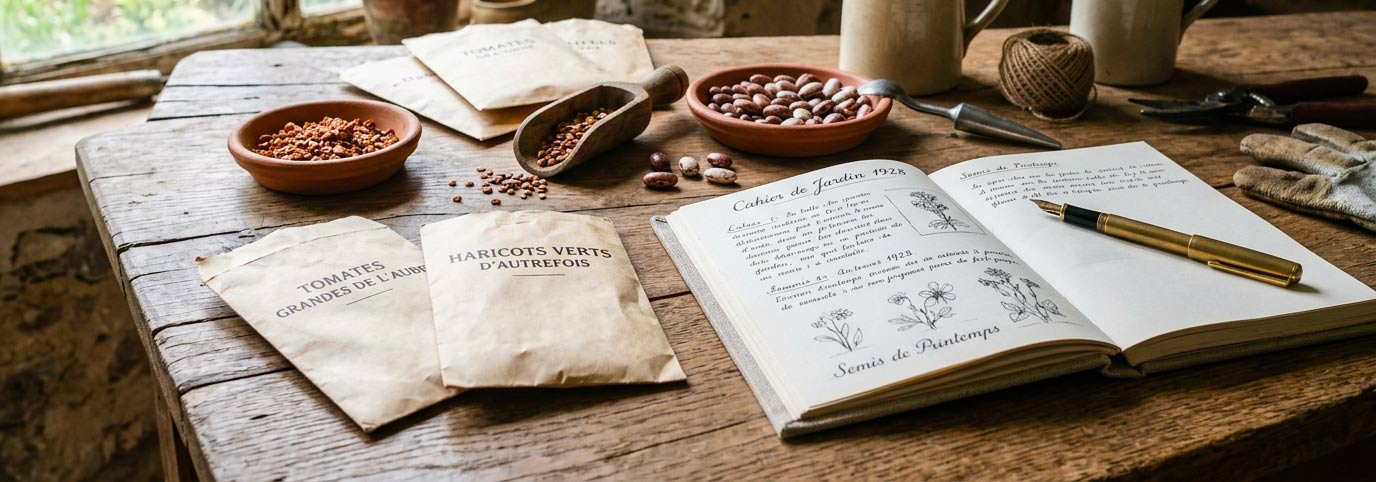
Before sowing, it's worth knowing whether your seeds are still capable of germinating. Especially if, like many gardeners, you have a box full of packets labelled "probably still good" from several seasons ago.
How long does a seed last?
On average, a seed retains good germination capacity for about 3 years. But this varies enormously depending on the plant.
Some seeds keep well:
- tomatoes
- squash
- beans
Others age quickly:
- parsnips
- onions
- some flowers
The problem is that an old packet doesn't always tell the truth. And finding out three weeks later that nothing has germinated is the surest way to lose time — and scramble to re-sow at the last minute.
In the book
In Olt-Time Gardening, each plant comes with its average germination lifespan, to avoid exactly this kind of unpleasant surprise.
How to test your seeds
No special equipment needed.
Take a small sample of seeds:
- 10 seeds
- or 20 for more accuracy
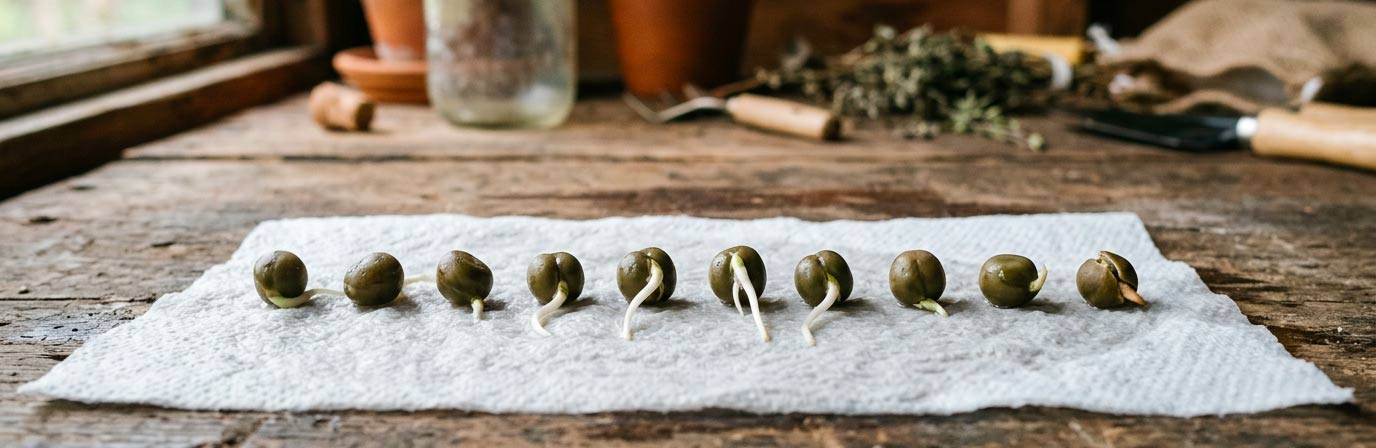
Dampen a piece of kitchen paper or cotton wool. It should be moist, not soaking. A seed that's drowning will rot before it even tries to grow.
Place the seeds on top and fold or cover:
- in a box
- on a plate
- or in a loosely closed plastic bag
Put it somewhere at room temperature. Then wait — a few days to a few weeks depending on the species.
How to read the results
The principle is straightforward.
- 9 out of 10 germinate → excellent rate
- 5 out of 10 → sowing is possible, but sow more densely
- 1 or 2 only → no point filling seed trays for nothing
This test prevents:
- wasting compost
- wasting weeks
- and above all blaming yourself for being bad at sowing when the seeds were simply long dead
A note on storage
Heat and humidity significantly reduce how long seeds stay viable. A packet left in a greenhouse, a damp garage, or a warm kitchen will age much faster.
Worth remembering
On the other hand, seeds stored dry, away from light and temperature fluctuations can sometimes remain viable far longer than expected. Yes, even that old packet found behind the jam jars might deserve a second chance.