You love pickles and vinegar preserves, but you only grew cucumbers this year? No problem at all. Large garden cucumbers work perfectly well for homemade pickles. It's actually a great way to find out whether you really enjoy vegetables in vinegar before dedicating garden space to a specific crop.
Cucumbers as a starting point
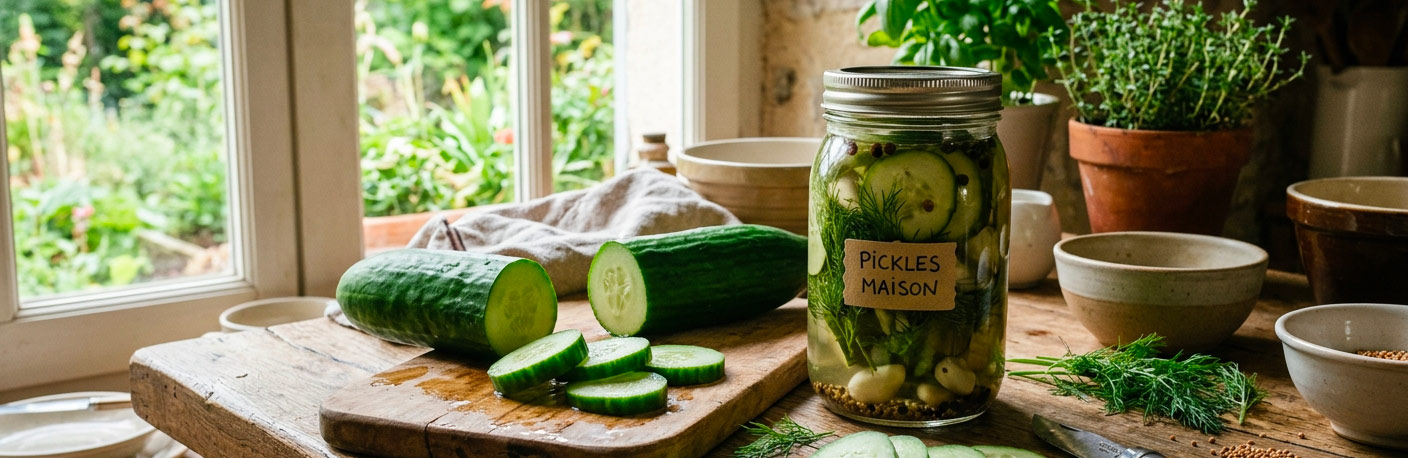
Sliced into rounds, cut into spears or wedges, garden cucumbers give excellent results in jars. They let you get comfortable with the core techniques: salting to draw out moisture, balancing vinegar and aromatics, packing jars properly. The texture will differ slightly from a traditional gherkin — a little softer, less crisp — but the result is genuinely good.
This is exactly what's meant by pickles in the Anglo-Saxon tradition: widely enjoyed in burgers, sandwiches, and composed salads.
Good to know
If you enjoy the cucumber version, consider planting a few gherkin plants next year. The results will be even better — proper gherkins stay firm and crunchy long after bottling.
What is a gherkin, exactly?
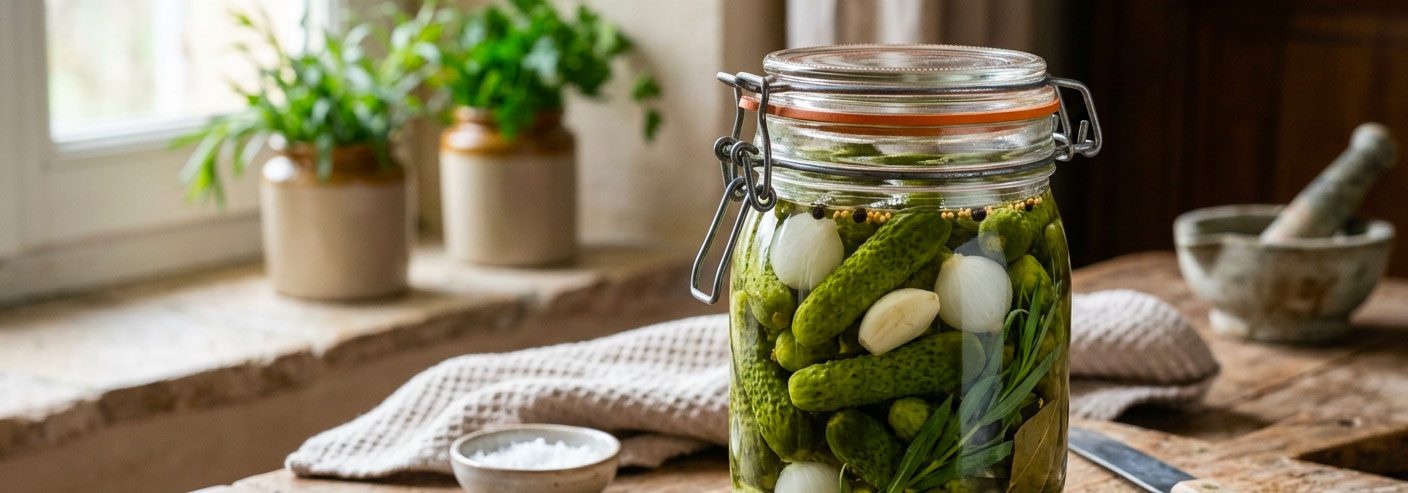
A gherkin is not a separate species. It is a cucumber variety selected to be harvested very young — often between 3 and 8 cm long — before the skin toughens and the seeds develop. The fruits remain small, firm, and particularly crunchy after preserving. These are the traditional gherkins served alongside charcuterie, terrines, and cold meats.
The textural difference is clear: where a cucumber preserved in vinegar tends to soften, a properly prepared gherkin keeps its crunch for months, sometimes over a year.
A traditional gherkin recipe
This recipe is adapted from a method used in the 19th century. It works equally well with proper gherkins or sliced cucumbers.
Gherkins in white wine vinegar
Ingredients
- 1 kg small gherkins (or sliced cucumbers)
- 500 g coarse salt
- 25 small pickling onions
- 2 garlic cloves
- 6 shallots
- 25 g fresh tarragon
- White wine vinegar (enough to cover)
Method
- Rub the gherkins in a clean cloth with the coarse salt to remove the small bumps on the skin.
- Rinse, then place in a large bowl with the 500 g of salt.
- Stir several times throughout the day, then leave to draw out moisture for approximately 6 hours.
- Drain thoroughly.
- Blanch the pickling onions briefly, then peel.
- Pack the jars with gherkins, onions, garlic, shallots, and tarragon.
- Cover completely with white wine vinegar.
- Seal the jars and leave to mature for at least three to four weeks before tasting.
Using cucumbers instead
The method is virtually identical. Simply cut the cucumbers into rounds or spears before salting. The resting time can be slightly reduced — four to five hours is usually enough. The aromatics stay the same, and white wine vinegar works perfectly.
Important
Make sure the vegetables are completely submerged in vinegar at all times. Any piece sticking up above the liquid may ferment or mould, which would compromise the entire jar.
How long do they keep?
In a properly sealed jar, with vegetables fully covered in vinegar, shelf life easily reaches one year, often longer. Once opened, store in the refrigerator and use within a few weeks.
What to serve them with
Gherkins are the traditional accompaniment to:
- Pâtés and terrines
- Charcuterie boards
- Cold meats and roasts
- Raclette and fondue
Cucumber pickles pair equally well with burgers, sandwiches, smoked fish, and potato salads.
Going further
Gherkins are just a small corner of the vinegar preserve world. Pickled vegetables, herb-infused vinegars, fruit preserved in vinegar, chutneys — the possibilities are wide, and the techniques are accessible once you understand the underlying principles.