When you harvest thyme, rosemary or sage in abundance, the question always arises: what to do with it all? Drying is the best-known method, but it's not the only one. For a long time, herbalists have used vinegar to preserve plants and draw out some of their aromatic compounds.
Why use vinegar?
Vinegar acts as a natural solvent. During steeping, it draws out some of the compounds present in the plants, including certain minerals and aromatic principles. Unlike an infusion that needs to be consumed quickly, a herb vinegar keeps easily for several months — often longer when stored correctly away from light.
Which plants to choose?
Not all plants respond the same way. Herbs with firm leaves generally give the best results:
- thyme
- rosemary
- sage
- oregano
- marjoram
- tarragon
Very delicate flowers tend to break down quickly in the liquid and are often less suitable for this type of preparation.
Good to know
Unpasteurised cider vinegar is generally preferred for this kind of steeping. It brings its own softness and aromatic complexity that ordinary white vinegar doesn't have.
How to make an herb vinegar
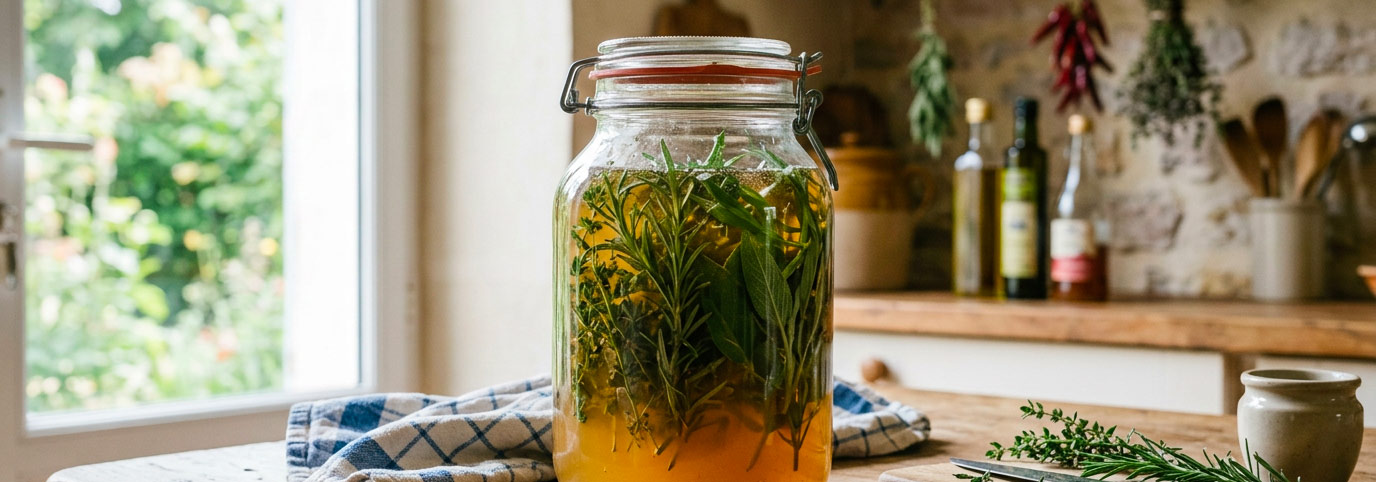
- Fill a clean jar about one third full with your chosen herbs.
- Cover completely with unpasteurised cider vinegar.
- Seal with a plastic lid, or place a sheet of baking paper between the metal lid and the vinegar to prevent corrosion.
- Leave to steep for three to four weeks, shaking the jar from time to time.
- Strain and store in a bottle away from light.
How to use herb vinegars
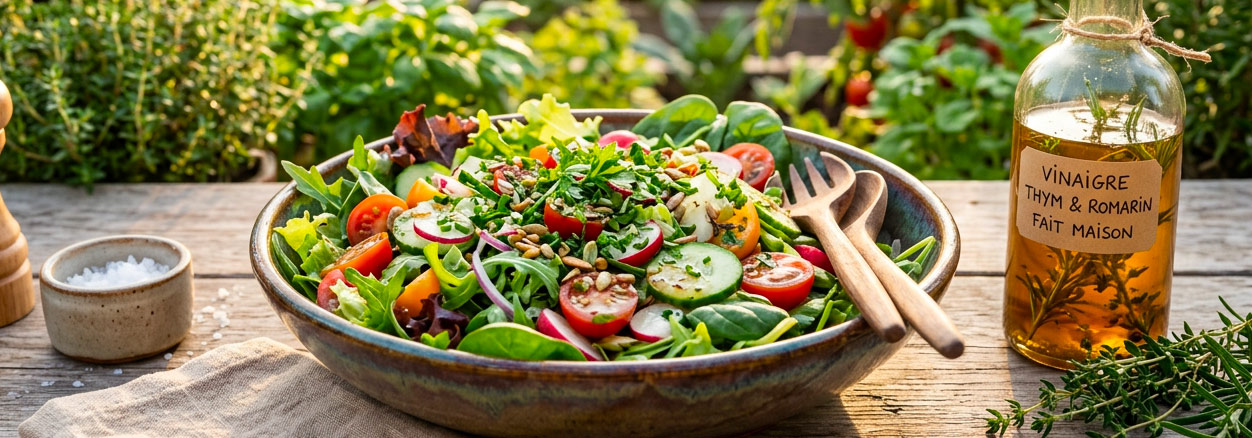
The possibilities are wide: salad dressings, marinades, roasted vegetables, potatoes, cold sauces, grilled vegetables. A few spoonfuls are often enough to transform a very simple dish. Herb vinegar can also substitute plain vinegar in any salad or sauce recipe.
Worth remembering
Make sure the herbs stay completely submerged throughout the steeping period. A herb poking above the vinegar can go mouldy and compromise the whole jar.
Key takeaways
Herb vinegar is probably one of the easiest ways to make the most of a generous herb harvest. A jar, a few aromatics and a little patience are all it takes to produce a fragrant condiment that will accompany meals for a good part of the year.