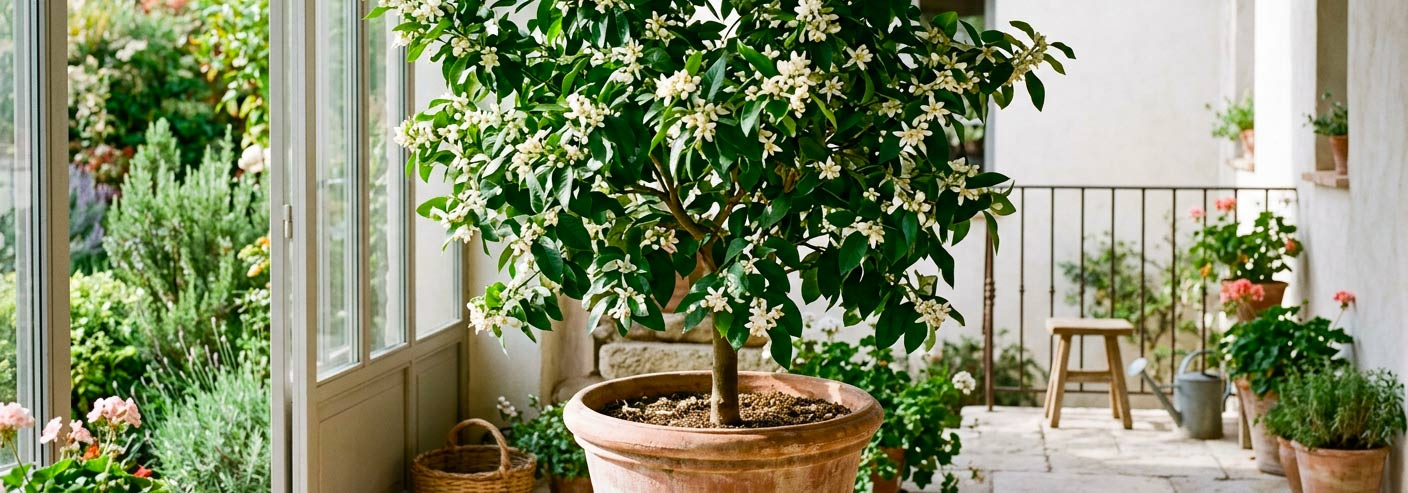
Flowers everywhere, an incredible scent, sometimes even dozens of buds — and then nothing. The blossoms drop, the tiny green balls dry up, and no lemons ever follow. This is an extremely common problem with lemon trees grown in pots, on balconies, in conservatories or indoors. And contrary to what many people think, it doesn't necessarily mean the tree is "sick".
A lemon tree can flower… without being able to fruit
Producing flowers already takes a great deal of energy. Carrying fruit through to maturity takes even more. A lemon tree can therefore perfectly well flower, start a few tiny fruits, and then abandon them halfway. The plant sometimes "tests" its own capacity based on the conditions it's given.
Lack of light: the number one cause
The lemon tree loves light. Not "a bright corner of the living room". Real light:
- direct sunlight
- long hours of exposure
- consistent warmth
A lemon tree can survive with little light. Producing fruit is another matter entirely. Indoors — especially in winter — many trees simply lack the energy to carry fruit through to the end.
The common problem with indoor lemon trees
In nature, citrus trees typically enjoy abundant light, a genuine difference between seasons, and a cooler rest period in winter. In a living room heated to 22°C year-round, with average light levels, the lemon tree often finds itself in an "artificial" situation. The result: unbalanced growth, flower drop, and small fruits that abort early.
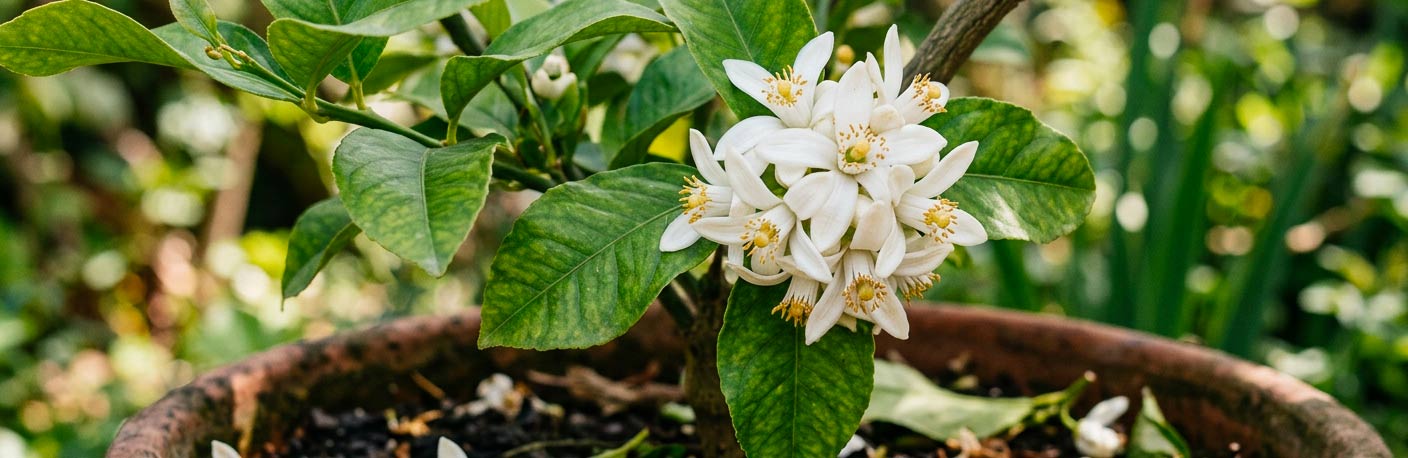
Lack of pollination
Outdoors, insects and wind do part of the work. Indoors, flowers can remain isolated. In this case, hand pollination can help: use a small soft paintbrush or a cotton swab, and gently transfer pollen from one flower to another. It's not a miracle cure, but it can noticeably improve fruit set.
Good to know
Hand pollination works best in mid-morning, when flowers are fully open. A gentle touch, repeated over several days of blooming, gives better results than a single intervention.
Too much fertiliser… and no fruit
An excess of nitrogen often pushes the lemon tree to produce lots of leaves and new shoots — but very little fruit. The foliage looks magnificent… and the lemons stay absent. This is common with generic "green plant" fertilisers that are too rich in nitrogen.
Watch out
Avoid generic high-nitrogen (N) fertilisers. Use a specialist citrus feed with a good potassium-phosphorus balance, especially from spring onwards.
Irregular watering
Citrus trees hate extremes. Alternating between bone-dry soil, a massive drenching, and drought again puts the plant under severe stress. The lemon tree may then drop its flowers or young fruit to conserve energy. The compost should stay slightly moist — never waterlogged, never parched.
A tree that's simply too young
Some lemon trees take several years before they produce consistently. This is especially true of seed-grown specimens or young plants that have recently been repotted. A small tree covered in flowers isn't necessarily ready to carry several fruits through to maturity.
Watch out for draughts and moving the plant
Citrus trees are not fond of sudden changes, being moved repeatedly, cold draughts, or temperature swings. Moving a lemon tree while it's in full bloom can be enough to trigger a massive flower drop. Yes — citrus trees can be remarkably sensitive.
Key takeaways
A lemon tree that flowers without fruiting is not necessarily in poor health. The plant is often trying to produce, but the conditions don't allow it to reach the fruit stage:
- insufficient light
- incomplete pollination
- irregular watering
- excess nitrogen
- lack of winter rest
- or simply the youth of the tree
Sometimes, all it takes is a little more sunshine — and a little less panicked attention every other day.