Many gardeners plant basil, chives, thyme or mint in spring. Everything goes well for a few weeks, then the plants flower, stems lengthen, leaves become less abundant and harvests drop. The plants aren't struggling. They're simply following their natural cycle.
A plant wants to make seeds
A plant's goal isn't to fill your plate. Its goal is to produce seeds and ensure its survival. When it begins to flower, part of its energy is directed towards producing flowers and then seeds. The result: leaf growth slows. This is particularly visible in basil, which can bolt very quickly in late summer.
Should you remove the flowers?
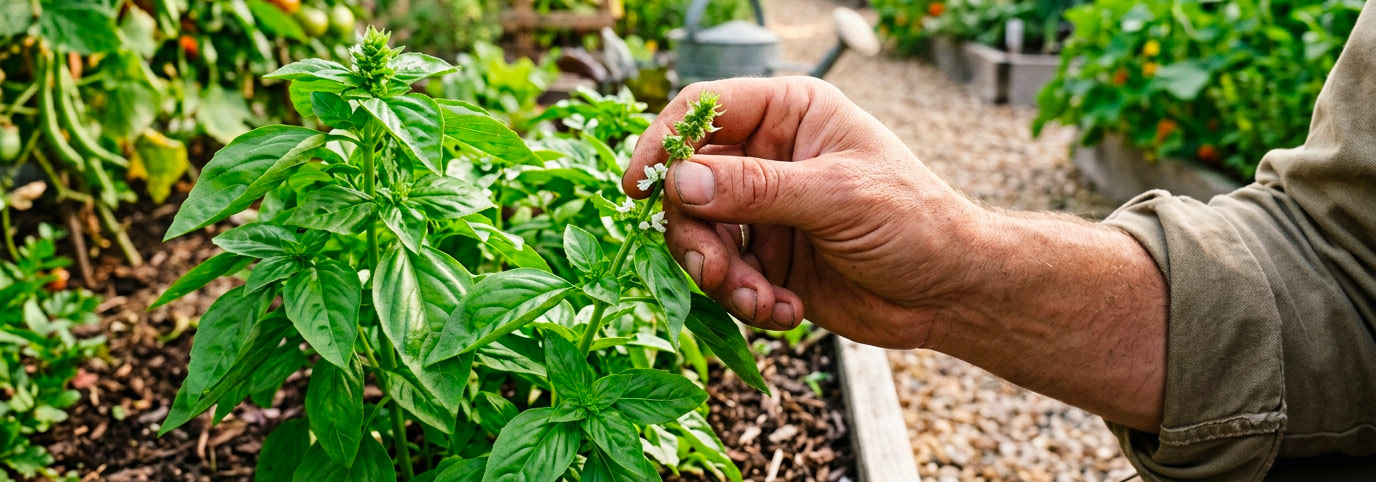
Yes… and no. If the goal is to harvest as many leaves as possible, it's often helpful to pinch out the flower buds as soon as they appear. The plant stays more compact and continues producing tender leaves. But that doesn't mean removing all the flowers.
Good to know
For basil, pinch just above each pair of leaves as soon as the first buds appear. The plant branches out and produces new side shoots. Done every two weeks, this can extend the harvest by several months.
Flowers attract pollinators
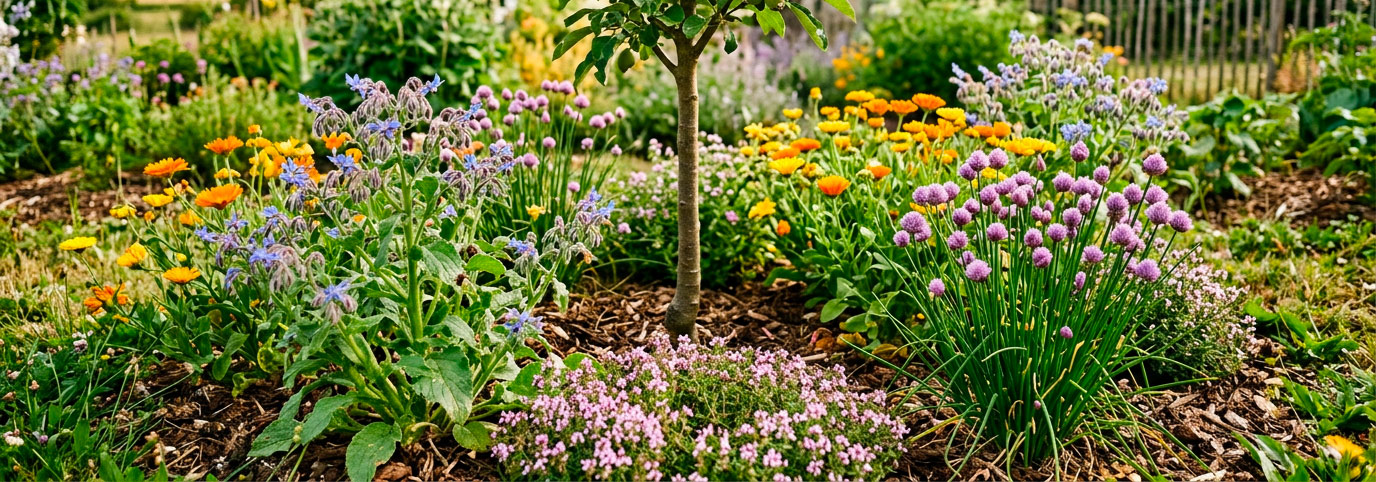
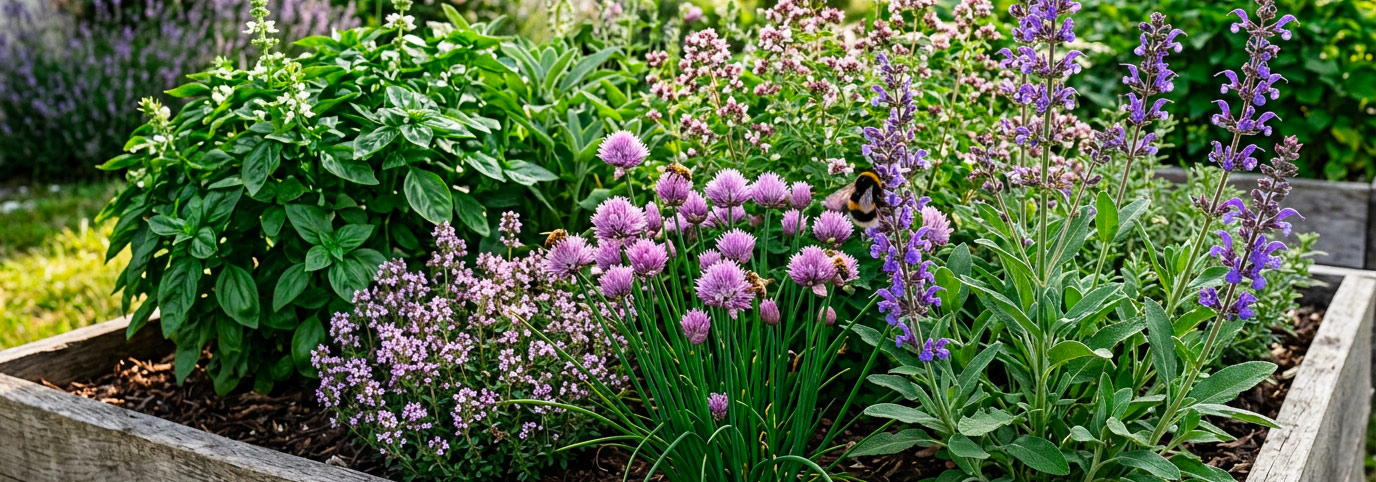
The flowers of chives, oregano, thyme, marjoram and sage are much appreciated by bees and bumblebees. Letting a few plants flower contributes to a more lively garden. A good approach is to harvest some plants regularly while letting others go to flower freely.
Harvest at the right time
A simple rule to remember:
- herbs grown for their leaves are harvested before flowering
- those grown for their flowers are harvested just before full opening
- those grown for their seeds are harvested when the seeds reach maturity
This is a principle found in traditional gardens for centuries — and it remains entirely valid today.
How to harvest without weakening the plant
A common mistake is cutting at random. For plants like basil, it's better to cut just above a leaf junction — the plant then branches naturally. For thyme, oregano or rosemary, it's better to cut whole stems with secateurs or scissors. In all cases, avoid removing the entire plant in one go.
Worth avoiding
Never cut more than a third of the plant at once, especially perennials like thyme or rosemary. A very hard cut in full season can weaken the plant for a long time.
Key takeaways
If your herbs are bolting, it's not necessarily a growing problem — they're simply trying to flower and set seed. By regularly pinching out flower buds, you extend the leaf harvest. By letting a few flowers appear, you feed the pollinators. As so often in the garden, the best result lies somewhere between the two.