Many gardeners dream of a garden full of butterflies. They plant lavender, colourful flowers, sometimes even a buddleia, then wait for visitors. Yet a very common mistake is wanting the butterflies without accepting the caterpillars. The two are inseparable.
Why caterpillars are essential
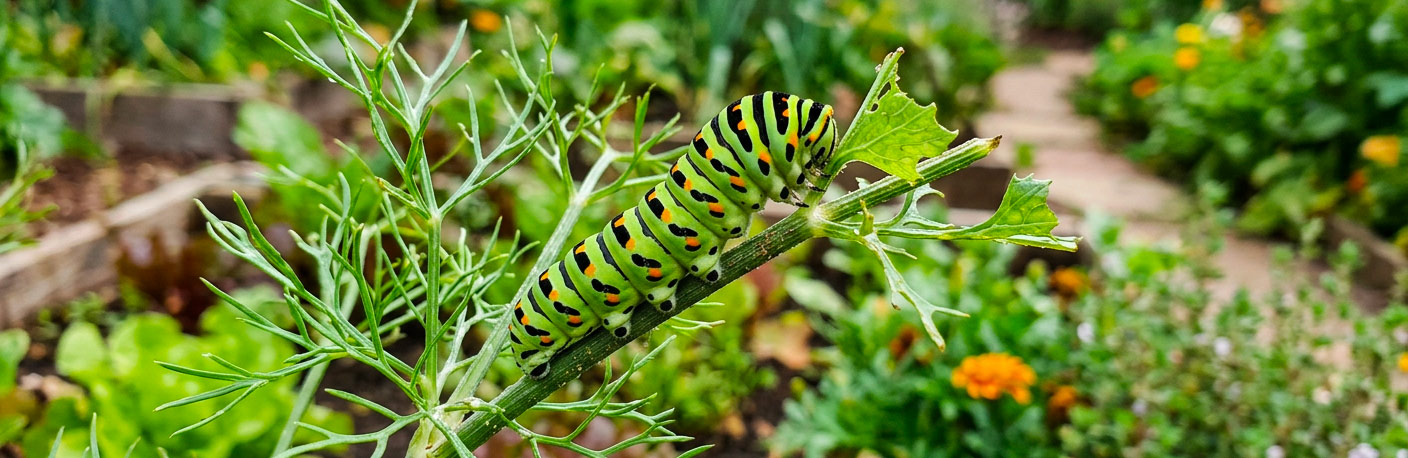
A butterfly always begins its life as a caterpillar. If no caterpillar can survive in your garden, butterflies won't be able to settle there permanently. A caterpillar has one purpose: to eat and grow. To do this, it needs very specific plants. Some species develop on nettles, others prefer fennel, dill or certain wild plants.
It is during this stage that the next generation of butterflies is built. Without host plants, adults can visit the garden for a few days, but they won't be able to complete their life cycle there.
Good to know
The stinging nettle is one of the most important host plants for caterpillars of many European butterfly species: peacock, red admiral, small tortoiseshell, comma. A small nettle patch at the back of the garden can make a big difference.
A few nibbled leaves are not a disaster
The moment a leaf shows holes, it's tempting to immediately blame caterpillars. Yet in most cases the damage stays limited. A living garden is never perfect. A few eaten leaves are part of the natural balance, just like faded flowers or birds pecking at fruit. Most plants cope very well with these small losses, with no impact on the harvest or flowering.
Flowers feed the adults
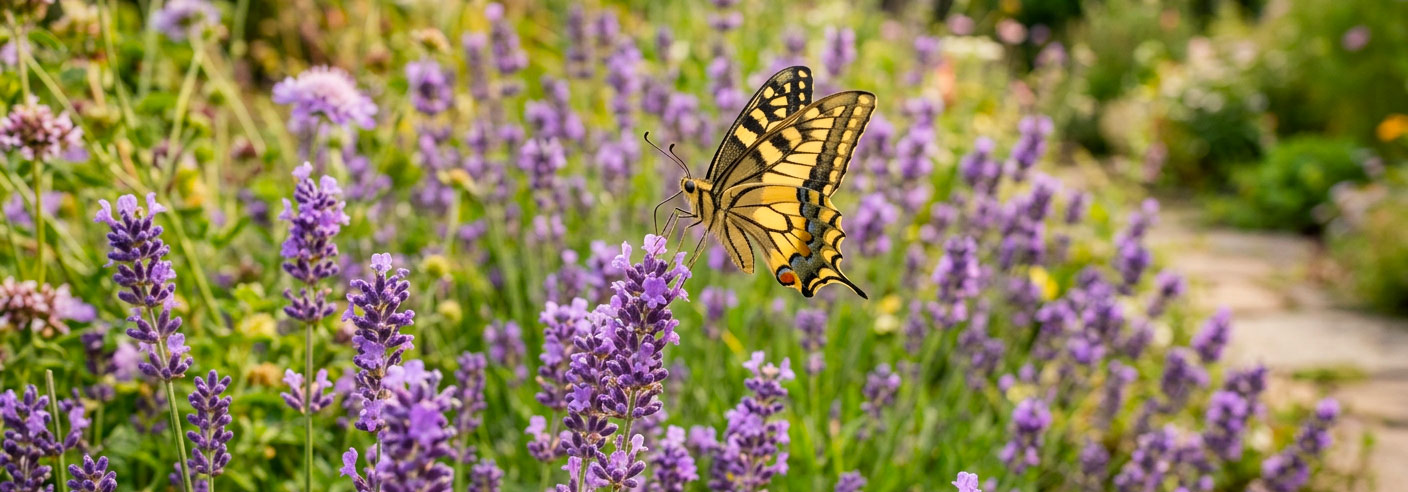
Caterpillars need leaves. Adult butterflies, on the other hand, seek nectar. That's why flowers remain essential. Some species are particularly popular:
- lavender
- borage
- cosmos
- zinnia
- echinacea
- cornflower
- scabious
- verbena bonariensis
- oregano and thyme in flower
The longer the flowering season stretches from spring to autumn, the more food butterflies find throughout the year.
Even a small garden can welcome them
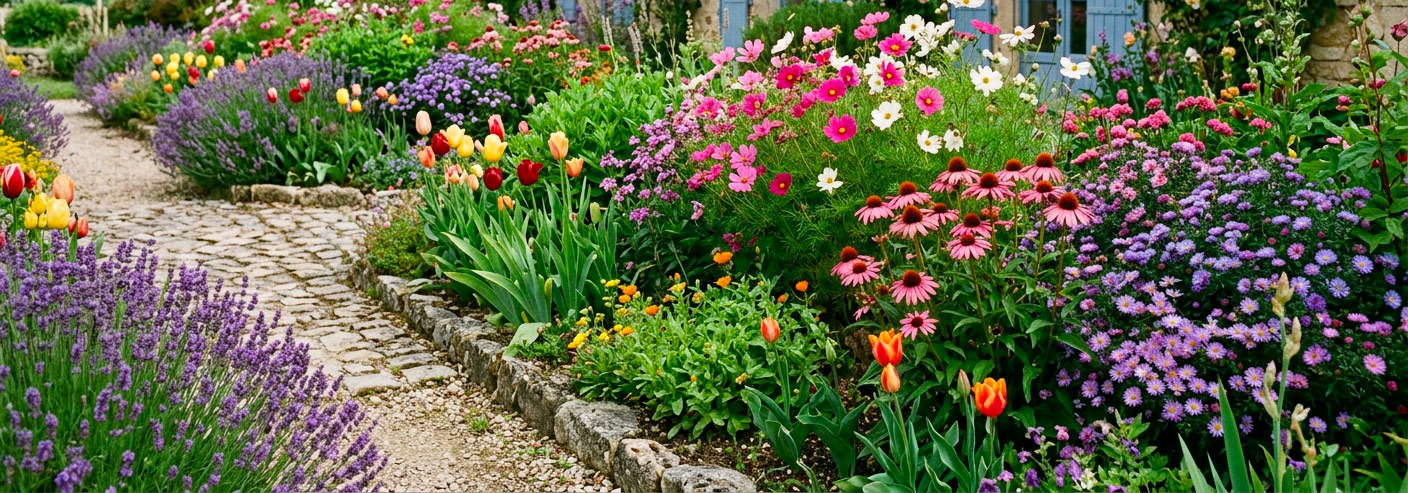
You don't need a wildflower meadow. A few beds, some herbs left to flower, or even a few pots on a balcony can already attract many pollinators. Lavender, thyme, oregano, borage and cosmos take up little space and are often heavily visited. The key is to offer both flowers for the adults and a few plants that can host the caterpillars.
A too-tidy garden is often an empty garden
For a long time, a beautiful garden was expected to be immaculate. Every dead leaf raked up, every stem cut at the end of flowering, every self-seeded plant pulled out. The problem is that insects use precisely these spaces to feed, reproduce or overwinter. A perfectly clean garden may look attractive, but it often becomes far less welcoming to wildlife.
Worth remembering
Leaving a few hollow stems, a pile of dead leaves in a corner, or some plants to go to seed may look untidy. It is actually one of the most useful things you can do for garden biodiversity.
Key takeaways
To attract butterflies, planting a few flowers isn't always enough. You also need to accept that part of their life takes place in a much less popular form: the caterpillar. A few nibbled leaves are often a sign that the garden is working as it should. By combining host plants with nectar-rich flowers, even a small space can become a refuge for butterflies, bees and many other pollinators. Sometimes, the most beautiful thing you can do for biodiversity is simply to leave a little room for life.