A handful of flowers today can become a winter herbal tea, a syrup next spring, or a fragrant dessert months from now. Long before industrial tea bags and artificial flavourings, flowers were harvested and dried to last all year. The methods were simple — and they haven't really changed.
Start by picking at the right moment
The quality of the drying depends first on the harvest. Flowers should be picked in dry weather, after the morning dew has evaporated, and before the heat of the afternoon sets in. Damp flowers dry poorly and are likely to brown or go mouldy.
Some traditional practices recommended picking very early in the morning — especially for elderflower or linden blossom — to preserve their fragrance as much as possible.
Choose only healthy flowers
Only keep flowers that are fully open, clean, free of disease and undamaged. Remove insects, yellowed leaves and unnecessary stems before drying. For certain species such as roses, violets or orange blossom, it is mainly the petals that are kept.
Good to know
A damaged or damp flower can contaminate a whole batch during drying. Better to harvest less but well — and try again the next day if conditions aren't right.
Drying: simple but essential
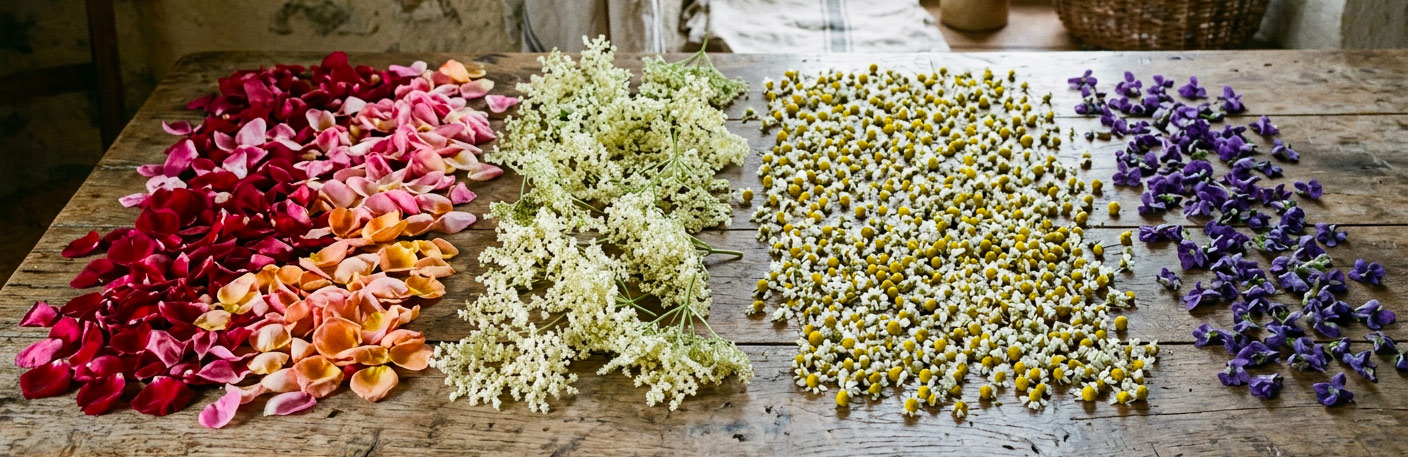
Spread the flowers in a thin layer on a cloth, a rack, a tray, or a table covered with paper. Set up in the shade, in a dry, well-ventilated spot. Direct sunlight speeds up drying but often causes loss of colour and fragrance.
Turn the flowers regularly so that moisture escapes evenly from all sides.
How to tell when they're ready
A properly dried flower becomes light and brittle. The petals should crumble easily between your fingers. If any part remains soft or slightly damp, drying needs to continue. It's better to wait a few more days than to find a box of mouldy flowers a few weeks later.
Watch out
Don't pack flowers away until they are completely dry. A trace of moisture inside a sealed jar is enough to ruin everything within days.
How to store them
Once dry, flowers can be stored in metal tins, airtight glass jars, or paper bags kept in a dry place. Avoid humid rooms and direct light. Stored in good conditions, many flowers keep their qualities for a full year.
Which flowers can be dried?
Among the most commonly used:
- linden blossom
- chamomile
- elderflower
- violet
- rose
- poppy
- mallow
- borage
- marshmallow
- white dead-nettle
Each flower has its own scent and particular uses, but the principles of harvesting and preservation are very similar across all of them.
What to do with dried flowers
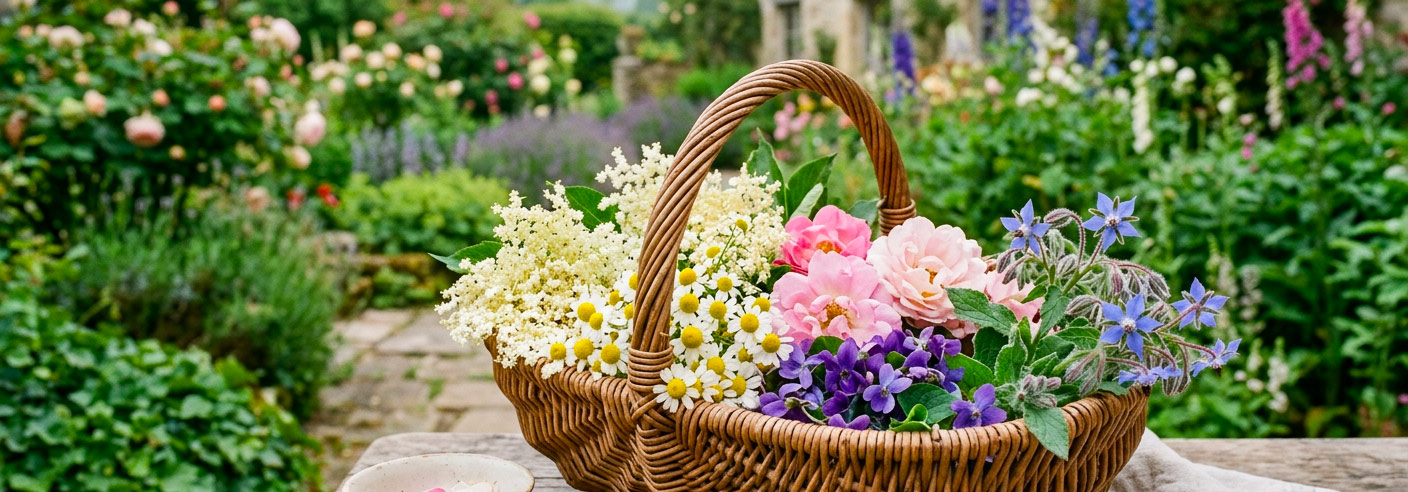
Dried flowers have a place in many preparations: herbal infusions, teas, syrups, jellies, flavoured vinegars, scented sugars, biscuits, desserts, edible flower blends. It's also an excellent way to enjoy the garden long after the last flowers have faded.
Key takeaways
Success rests on three simple rules: pick flowers that are perfectly dry, dry them slowly in the shade, and store them away from moisture. Traditional households used neither dehydrators nor complicated equipment — yet their dried flowers still scented teas and desserts months after harvest.