A week away. No rain. No gardener to do the work in your place. And it feels like months of effort, from sowing to harvest, are lying on the ground. The vegetable garden made do on its own.
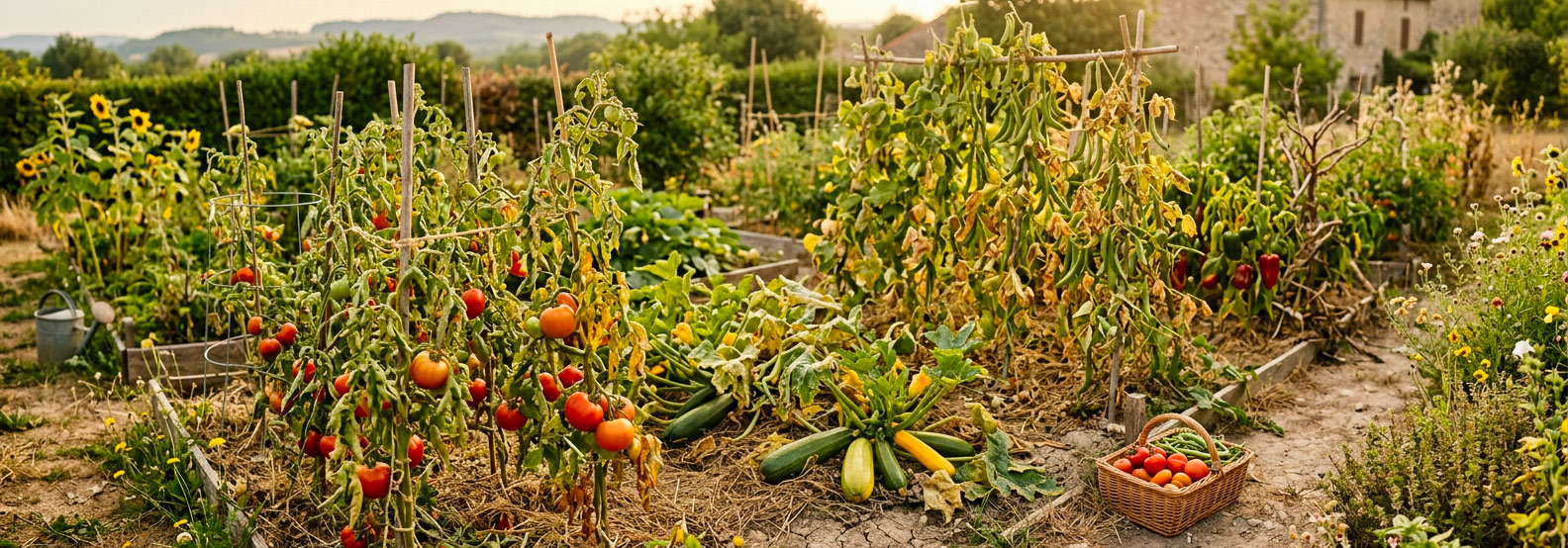
Coming back, you usually find a bit of everything: limp leaves, a few overripe vegetables, bone-dry soil, zucchini that have turned enormous, tomatoes that carried on with their lives without you, and quite a few plants that didn't exactly enjoy the experience.
The first instinct, naturally, is to want to fix everything at once: water heavily, cut off anything that's turned yellow, add a bit of fertilizer to "help," harvest, weed, dig around the base. You want to make up for a week of neglect in one evening. But after a week without water, the most useful approach is usually much simpler: rehydrate, observe, harvest, and let the plants recover at their own pace.
First, look before you water
Even after a rainless week, I start by checking the soil. A mulched, clay-heavy or shaded patch can still hold moisture deeper down, even when the surface looks completely dry.
So I scratch away a few centimetres. If it's dry underneath too, then yes: watering can. And if the plants are clearly wilted when I get back, I don't necessarily wait until the next morning just because "it's better to water early." They're thirsty, so they drink.
Rehydrating slowly but deeply
After several days without rain, I try to avoid the token little watering that only dampens the surface for peace of mind. The goal is for the water to actually reach the roots.
If the soil is very dry and water just runs off instead of soaking in, I do two passes: a first one to dampen it, a few minutes' wait, then a second, more generous one. That lets the water genuinely sink into the soil instead of running off to the neighbouring plant.
Harvest everything that didn't wait for you
While you were away, the vegetables obviously didn't pause their growth. So I start by harvesting:
- ripe tomatoes
- zucchini that have gotten huge
- ready cucumbers
- beans that are past their best
- any damaged or overripe fruit
This lightens the load on the plants and stops them wasting energy on fruit that's already finished its run. It also makes it a lot easier to see what's actually going on under the jungle.
Don't panic over a few yellow leaves
After several days of drought, some leaves can look limp, yellow or slightly scorched. I don't cut everything off right away: a leaf that's still partly green is still useful to the plant.
I only remove:
- anything that's completely dry
- anything that's broken
- anything that's rotten
For the rest, I wait a day or two to see what bounces back. It's genuinely striking how much some plants can perk up after a good watering.
No fertilizer on arrival
This is probably the most tempting mistake. The plant looks rough, so the instinct is to give it "a little boost." But after a week without water, the main problem usually isn't a lack of fertilizer: it's a lack of water, full stop. No agronomy degree required. So I start by getting the watering back on track and wait to see how the plant responds. If it's producing new leaves a few days later, things are already looking a lot better.
Topping up the mulch
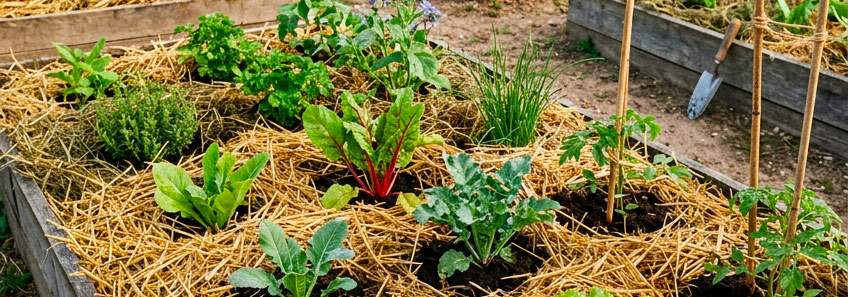
If the soil is bare, this is the moment, but always after watering. Mulch helps hold onto the moisture you've just restored and stops the soil drying out again within hours. Straw, dry grass clippings, dead leaves, wood chips: and conveniently, dead leaves are one thing I've had no trouble finding.
Tomatoes, zucchini: easing back in, not zero to sixty
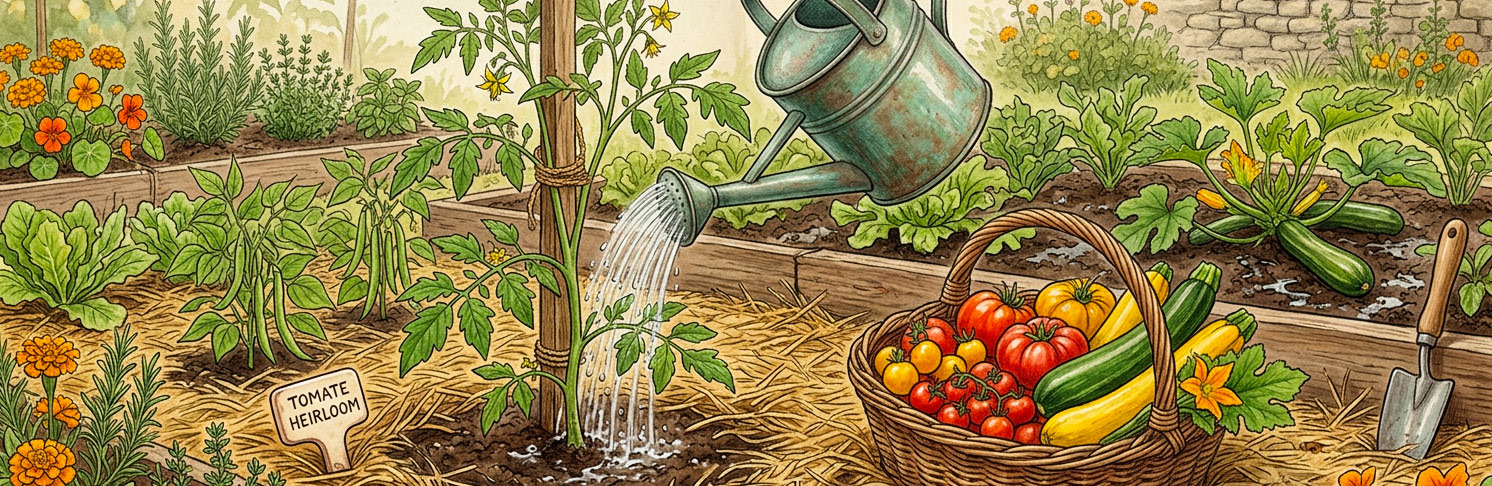
Tomatoes don't cope well with big swings in moisture. After a dry week, I harvest the ripe fruit first, then go back to a regular watering routine. The idea isn't to make up for seven dry days by giving them seven days' worth of water in one evening. Same principle for peppers, eggplants or cucumbers: just ease back into a normal rhythm.
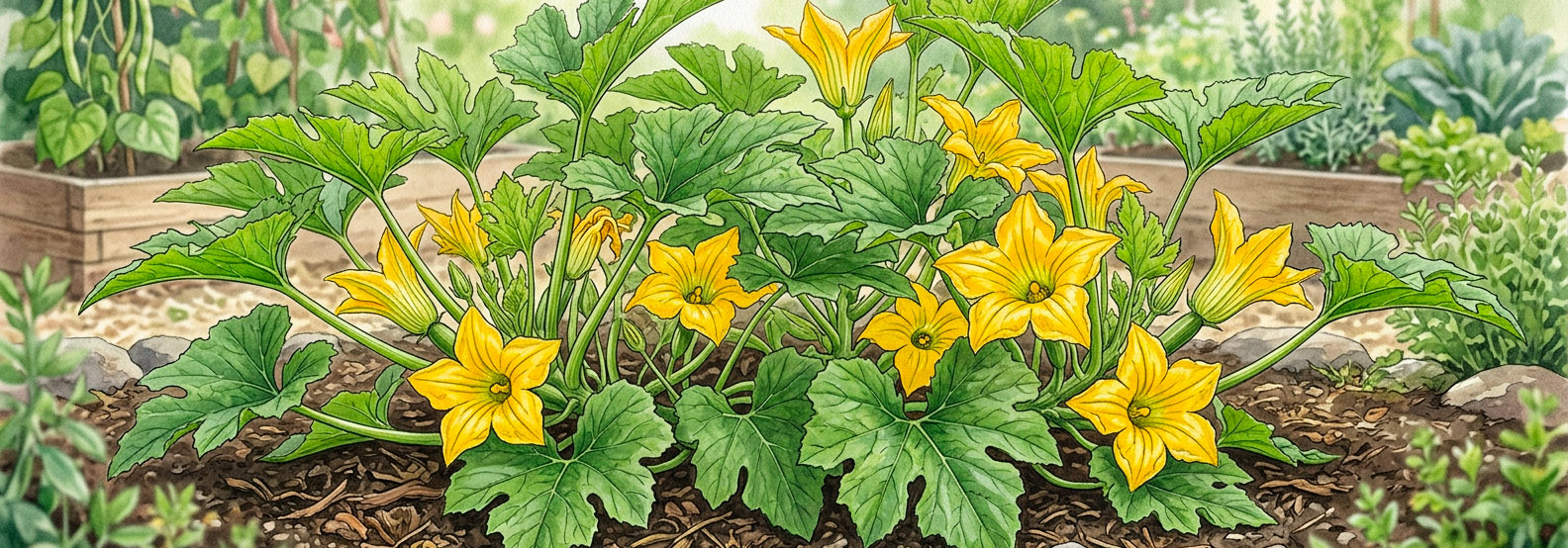
With zucchini, I mostly look at the centre of the plant. The large leaves may have suffered a lot, and that's not necessarily a big deal: what matters is whether the centre of the plant still looks vigorous, and whether new leaves or flowers are appearing. I harvest the zucchini that got too big, remove any leaves that are truly dead, and let it get on with it. Given how good they are at producing an entire jungle in a matter of days, zucchini are generally not the last to bounce back.
Weeding? Yes, but no need to dig up the whole garden
Weeds, on the other hand, made excellent use of your absence. Funny enough, they're usually the greenest thing in the entire garden. I pull them out, especially around the vegetables, because they're competing for water.
The next two days: just watch
Once the garden has been watered, harvested and lightly tidied, I stop there. For 24 to 48 hours, I watch:
- are the leaves perking back up?
- are new shoots appearing?
- are the flowers still going?
- does the plant still look like it's declining?
It's only after this short waiting period that I decide whether more intervention is needed.
"After a rainless week away, the vegetable garden doesn't necessarily need saving. It mostly needs a drink, and for us to stop looking at it like it needs a funeral wreath."
My order of priorities when I get back
- Check soil moisture.
- Water deeply if needed.
- Harvest anything ripe or overripe.
- Remove only what's genuinely dead or damaged.
- Top up the mulch.
- Weed around the vegetables.
- Wait a day or two before deciding a plant is lost.