Hotter summers don't necessarily doom the vegetable garden to living on a drip. What they do force is giving up a few bad habits: watering out of habit every evening, leaving the soil bare, or growing the same vegetables in the same spot without considering the soil and exposure.
The goal isn't to grow vegetables without water — no productive garden can do that. It's about using every liter in the right place at the right time, and building a soil that holds onto moisture longer.
Water less often, but properly
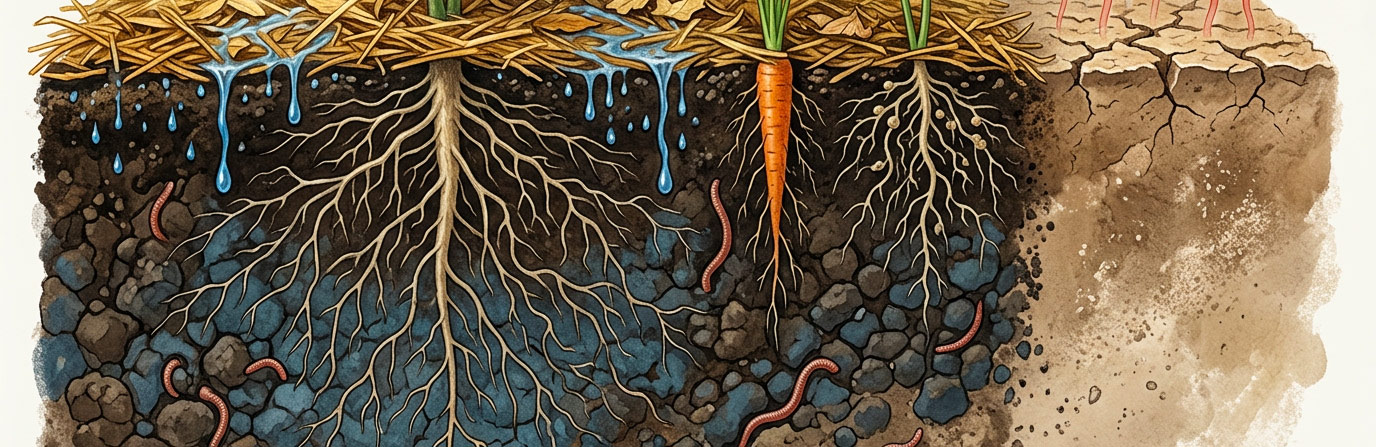
A small daily watering usually wets only the top few centimeters of soil. Roots then stay close to the surface — exactly where the soil dries out fastest.
It's better to water more slowly, right at the base of the plants, so the water reaches the root zone. Before reaching for the watering can, push the mulch aside and press a finger or a small trowel into the soil. A dry surface doesn't necessarily mean the soil is dry further down.
This rule doesn't mean letting plants suffer, though. Many fast-growing vegetables — lettuce, zucchini, eggplant, tomatoes forming fruit — need fairly steady moisture. A lack of water can shrink fruit size, make some vegetables bitter, or trigger early bolting.
Never leave the soil bare in summer
Soil exposed to the sun heats up quickly. Part of the water it receives evaporates back into the air before it ever reaches the vegetables.
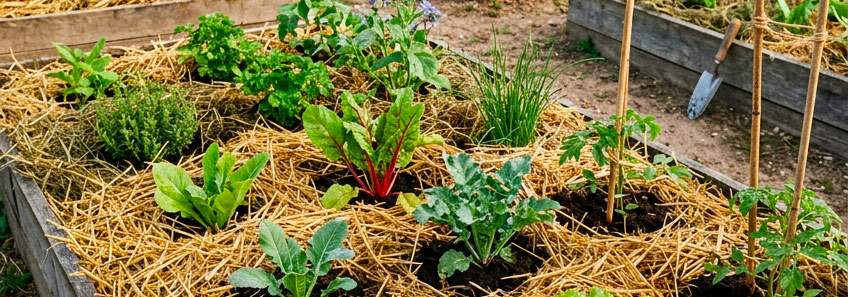
A layer of mulch slows this evaporation, limits competing weeds, and protects the soil surface from crusting. Straw, dry leaves, pre-dried grass clippings, fine wood chips or coarse compost all work, depending on what you have on hand.
A thickness of around 5 to 10 cm is a good starting point, leaving a small gap around the base of each plant. Check regularly what's happening underneath, though: mulch retains moisture, but it can also shelter slugs or hide soil that has actually become too dry.
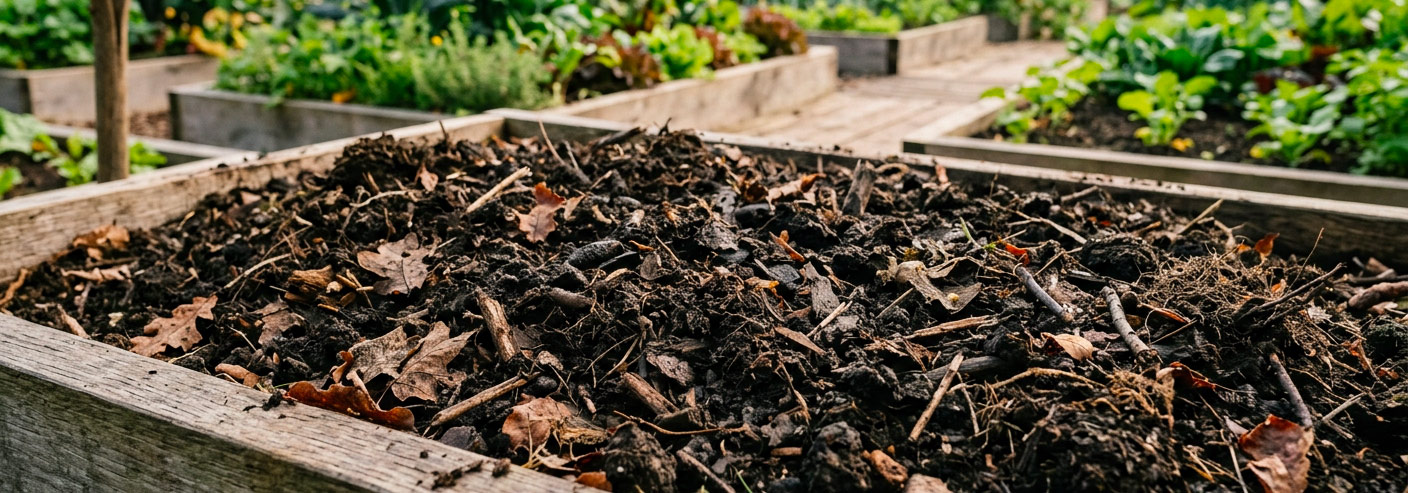
Regular compost additions gradually improve soil structure. The effect varies depending on whether your soil is sandy, silty or clayey, but a well-structured soil absorbs water better and holds it more efficiently.
Choose plants suited to your land
There's no miracle variety that produces abundantly without water. Performance depends on climate, soil, planting date, and sometimes rootstock.
Heirloom varieties aren't automatically more resistant than modern ones. Some are very well suited to dry terroir; others were selected in cooler regions or for deep, moist soils.
In your own garden, watch which varieties perform best over several seasons. Recommendations from a local nursery or seed grower are often more useful than a generic list found online.
You can also give more space to vegetables that are naturally undemanding once established: certain long-cycle squash, chickpeas in suitable regions, purslane, orache, chard, Jerusalem artichoke, or Mediterranean herbs. Their frugality doesn't excuse skipping water at sowing and transplanting, though.
Create shade rather than fight the sun
Not every vegetable needs to take the full brunt of the afternoon sun.
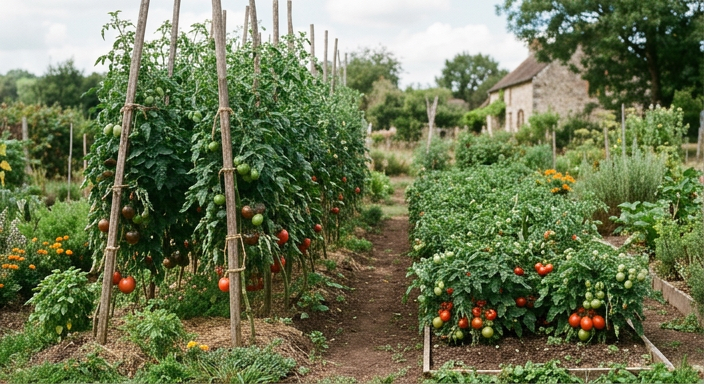
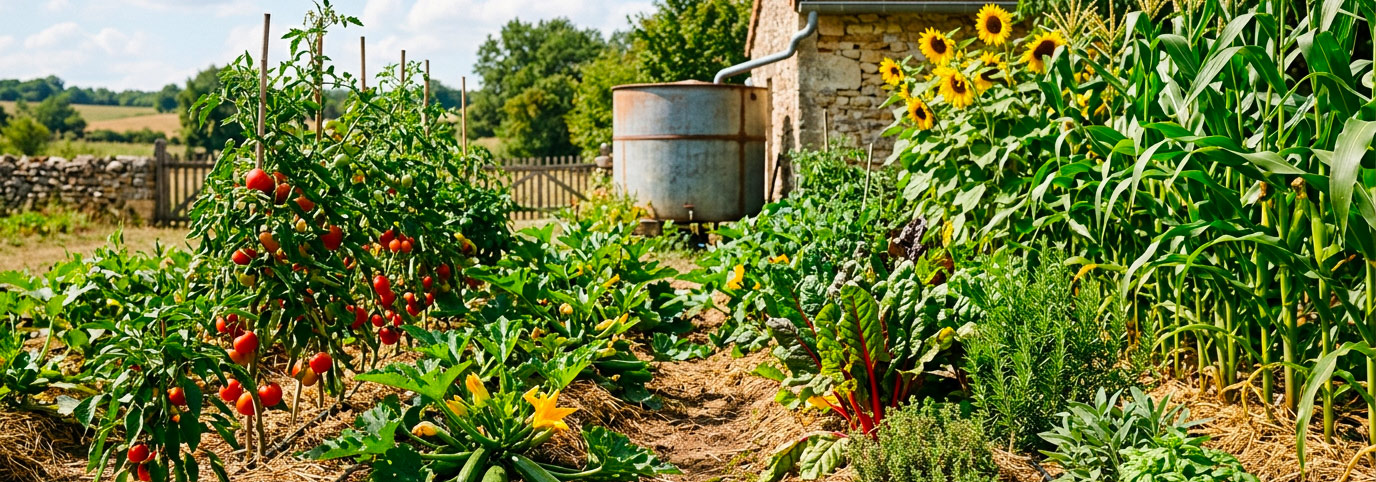
Tomatoes, corn, sorghum, sunflowers, or climbing beans can cast light shade over lower crops. Lettuce, radishes, parsley or young transplants placed on the east or north side of these plants will suffer less during the hottest hours.
In very exposed regions, a shade cloth placed over crops during a heatwave can reduce heat stress. It shouldn't enclose the plants or block air circulation, though.
Wind matters too. A permeable hedge, a planted fence, or tall crops placed on the side of drying winds slow air movement without turning the garden into a stuffy, closed-off space.
Accept that not everything needs the same watering
When water becomes scarce, priority should go to the most vulnerable plants:
- seedlings that are still emerging
- recently transplanted seedlings
- vegetables grown in pots
- lettuce and leafy greens
- crops that are flowering or forming fruit
- young trees and shrubs recently planted
Well-established plants, Mediterranean herbs, or crops close to maturity can generally wait longer. Collecting rainwater, grouping plants by their needs, and watering at the base also help reduce losses.
Watch out
For tomatoes, sudden swings between very dry soil and heavy watering favor fruit splitting and calcium uptake issues. So the right principle isn't "let the tomato suffer," but avoiding shallow watering while keeping moisture reasonably steady.
What professional trials confirm
Trials carried out as part of the CLIMATVEG project point in the same direction: reduced tillage, cover crops, and organic matter additions improved the resilience of lettuce and broccoli crops exposed to water and heat stress. These results don't translate directly into percentages for a home garden, but they confirm the value of protecting and feeding the soil rather than constantly turning it over.
Good to know
The MUSARAIGNE project, carried out on chestnut trees, illustrates this complexity well: a hybrid rootstock initially considered weak turned out to be particularly tolerant of water deficit, especially when paired with the Bouche de Bétizac variety. A plant should be judged on its actual performance in a given environment, not on how old the variety is.
A frugal garden isn't a thirsty garden
Growing with less water doesn't mean watching vegetables wither in the name of supposed toughness. Frugality means knowing your soil better, protecting its surface, choosing suitable plants, and saving your watering for the moments when it will actually make a difference to the harvest.
"A resilient vegetable garden doesn't rest on one spectacular trick — it rests on a series of simple habits that, added together, make all the difference."
Covered soil, deep roots, a bit of shade, and water distributed with judgment: that's really all it takes to keep a vegetable garden productive, even as the thermometer climbs.