Nettles are probably one of the most unloved plants in the garden. They sting, self-seed freely and appear where you least expect them. Yet for centuries they have been used both in food and in traditional preparations. One of their least-known uses is steeping them in vinegar.
Why nettles?
Nettles are naturally rich in minerals. This is why they appear regularly in herbalism literature when discussing plant-based preparations. They are among the best candidates for making what is known as a "mineral vinegar" — a cider vinegar in which plants have released some of their compounds during a long maceration.
Other plants can be added
Nettles aren't the only option. Other garden or hedgerow plants can be included in the mix:
- parsley
- nasturtium leaves
- dandelion leaves
- chickweed
- fat hen (goosefoot)
The goal isn't to follow a strict recipe, but to make use of whatever grows abundantly in the garden — plants that are often pulled out without a second thought.
Good to know
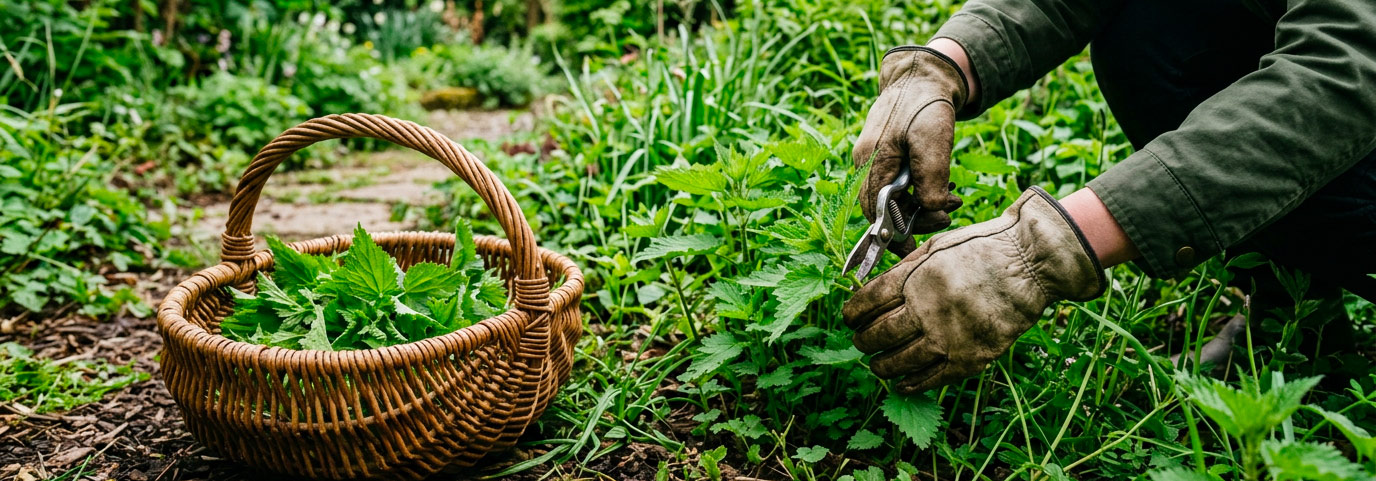
Wear gloves when harvesting nettles. Only the young, tender leaves at the top of the plant are used. Once dried or steeped, they no longer sting.
A very simple preparation
- Fill three quarters of a clean jar with fresh plants.
- Top up with cider vinegar.
- Seal and leave to steep for at least one month, shaking the jar regularly.
- Strain and bottle.
A surprising trick: eggshells
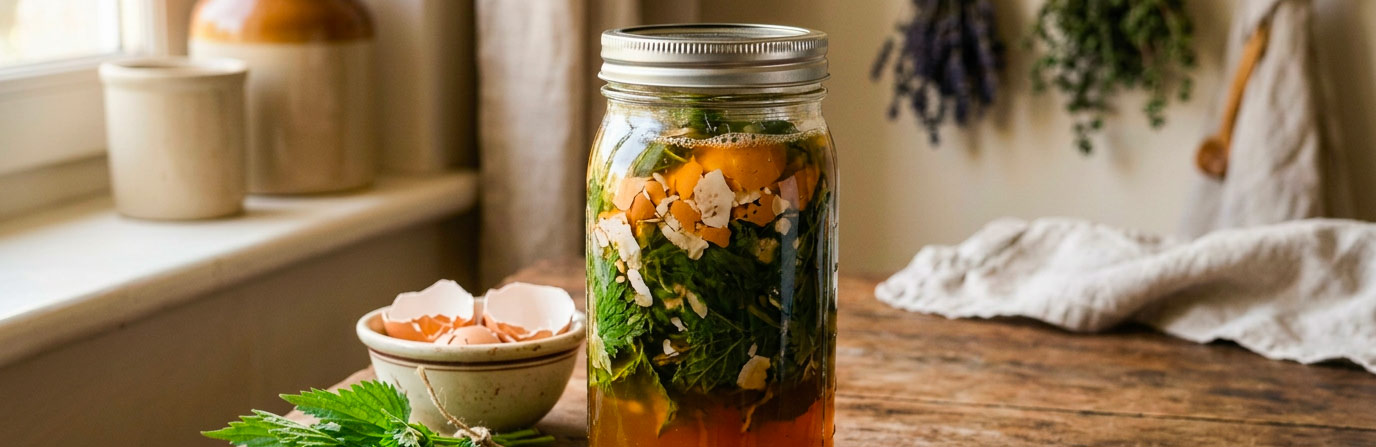
A few well-dried, crushed eggshells can also be added to the jar. The vinegar dissolves them gradually during steeping. This traditional practice allowed a kitchen waste to be put to use rather than thrown away. Eggshells are rich in calcium, and their dissolution in the vinegar enriches the preparation.
How to use this vinegar
The simplest approach is to use it like any other vinegar: in salads, over cooked vegetables, in sauces or certain marinades. A few spoonfuls are enough. It can also substitute plain vinegar in any salad dressing.
Key takeaways
Before modern supplements, gardeners looked to make the most of what they had at hand. Nettles, dandelions and other spontaneous plants were part of the daily landscape. Mineral vinegar follows that same simple logic: using the garden's resources rather than treating them as weeds. If nettles are taking over a corner of the garden, they can become something other than a problem.