When starting an herb garden, there's a tendency to buy or sow the same plants every spring. Yet some herbs can live for several years and produce reliably without needing to be started again each season. These perennials are an excellent investment: once established, they generally require less work while providing generous harvests.
Why choose perennial herbs?
Perennial herbs gradually develop a substantial root system that often helps them withstand dry spells better than annuals. They also get going earlier in spring. And they allow for quick harvests without waiting weeks for growth — a simple walk around the garden is often enough to find something to flavour a meal.
Chives: the reliable one
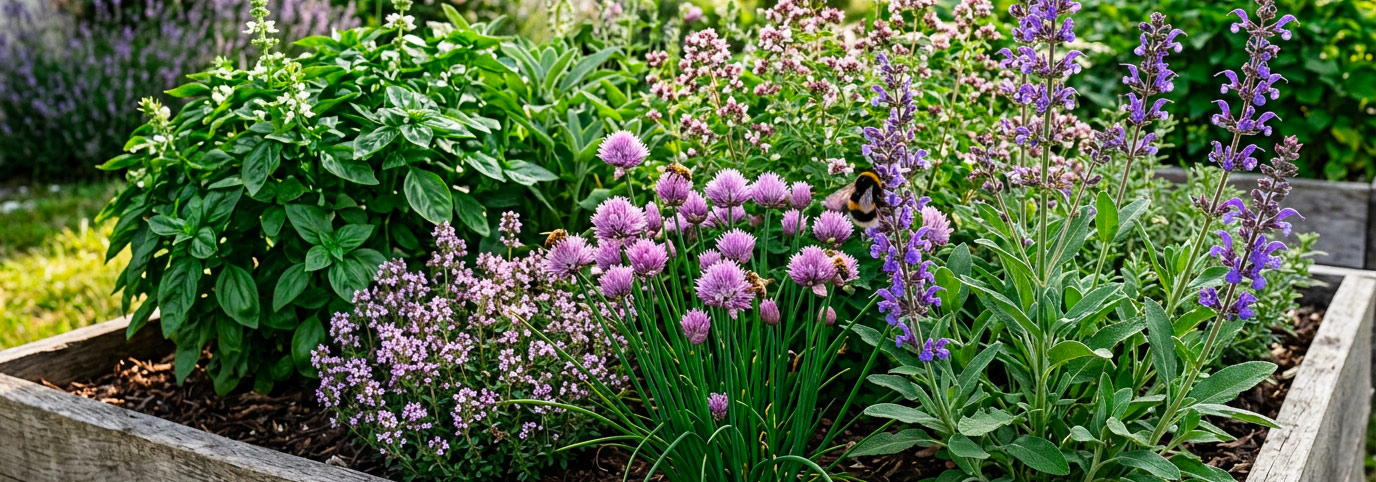
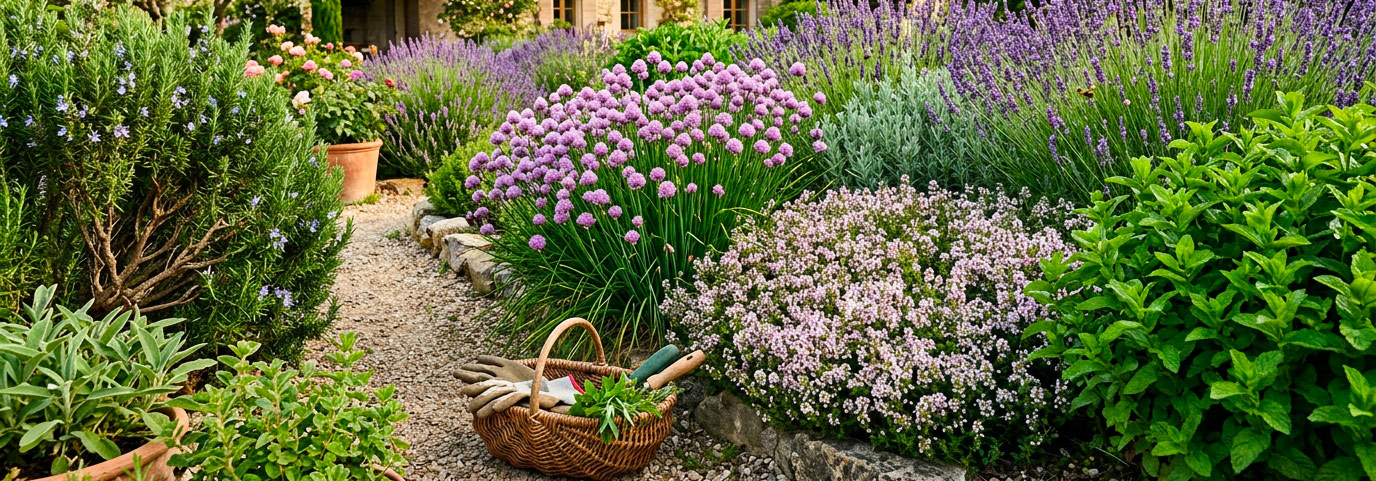
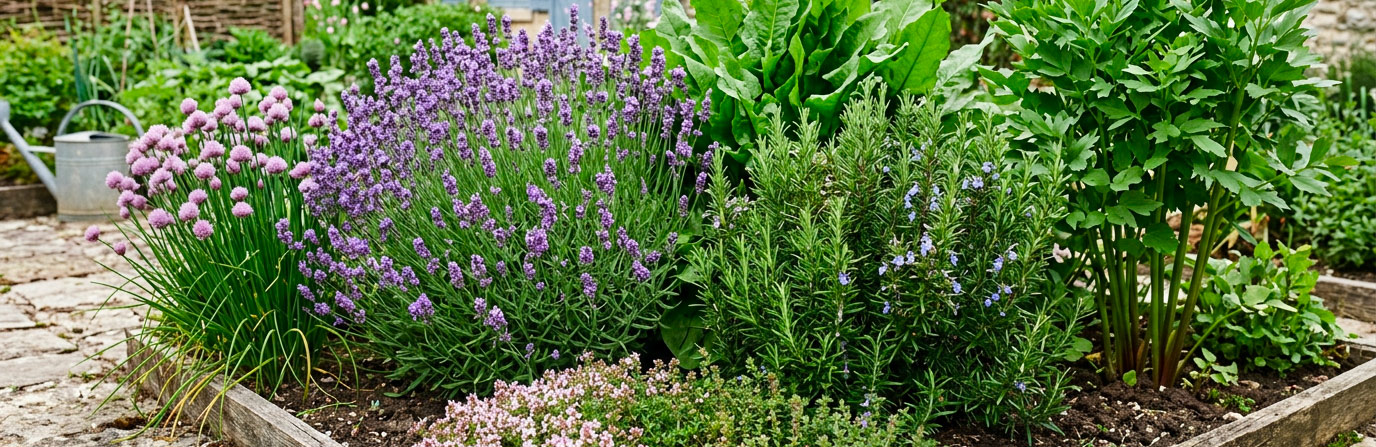
Chives are one of the easiest plants to grow. They cope well with cold and often disappear in winter before coming back with the first mild days. Their fragrant leaves add flavour to salads, omelettes, sauces and vegetables. If you let a few stems flower, you'll also enjoy beautiful purple flowers that bees love.
Mint: generous but invasive
Mint is probably one of the most vigorous plants in the garden. It produces new shoots quickly and can take over an entire bed through its underground rhizomes. This is why it's often better to grow it in a large pot or a confined space. In return, it provides years of material for infusions, desserts, syrups and cold drinks.
Tip
To contain mint in open ground, sink a bottomless pot into the soil around the roots. The underground barrier limits rhizome spread without completely blocking the plant.
Thyme: almost self-sufficient
Thyme likes sunny spots and well-drained soil. Once established, it requires very little attention. It tolerates dry spells reasonably well and can live for many years. In spring and summer, its flowering attracts many pollinators.
Lavender: beautiful and useful
Lavender is as much an ornamental plant as a culinary herb. Its scent attracts bees and its flowers can be used in certain recipes, infusions or fragrant sachets. It thrives in sun and poor, well-drained soil. In good conditions, a lavender plant can live for several decades.
Sorrel: one of the first spring harvests
When the garden is barely waking up after winter, sorrel is often already ready to pick. Its slightly sharp leaves are used in soups, sauces and omelettes. It gradually forms handsome clumps that produce faithfully every year.
Lovage: the aromatic giant
Less well known today, lovage was once a common feature of traditional gardens. This tall perennial can exceed one and a half metres in height. Its leaves carry a celery-like flavour and are used in soups, stocks and slow-cooked dishes. Once established, it remains productive for many years.
Rosemary: a small Mediterranean shrub
In regions with mild winters, rosemary becomes a genuine shrub. It keeps its foliage all year and allows harvesting of sprigs even in winter. In colder areas, it appreciates a sheltered spot or pot cultivation.
Some annuals that reseed themselves
Some plants aren't truly perennial but give that impression. Dill, coriander and borage produce abundant seeds and often reappear from one year to the next without any help from the gardener. They earn a place in the garden despite their annual cycle.
Key takeaways
An herb garden doesn't need to be completely started over each spring. A few well-chosen perennials — chives, thyme, mint, lavender, sorrel, lovage or rosemary — can provide harvests for many years. Their main secret is simple: give them time to establish.