Mint is often recommended for beginner gardeners. It grows quickly, tolerates the occasional missed watering, handles cold well and produces large amounts of fragrant leaves fast. On paper, it's the ideal plant. Yet many gardeners end up regretting having planted it directly in open ground.
A plant that travels underground
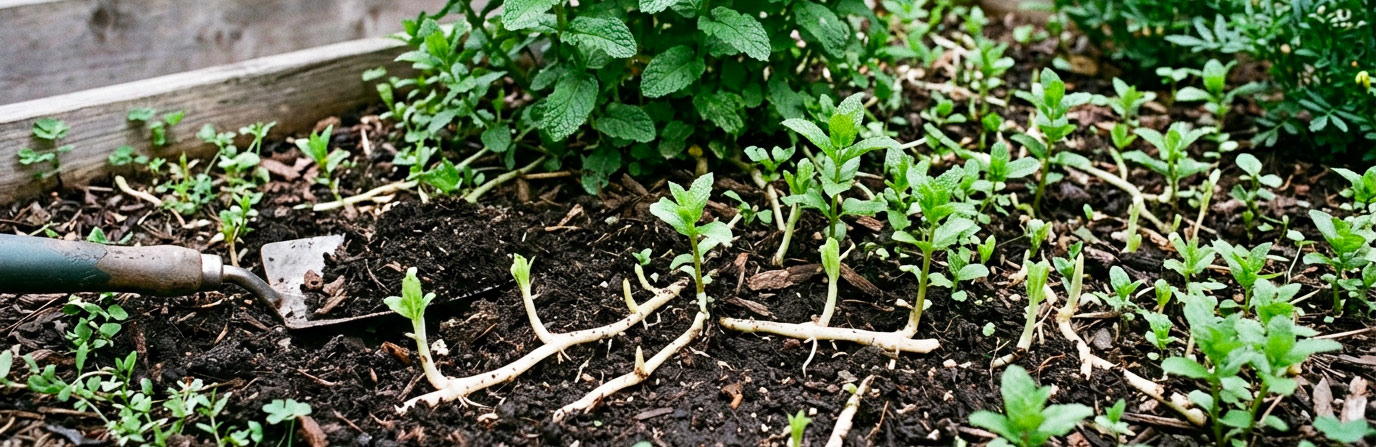
Unlike some herbs that stay neatly in place, mint develops rhizomes. These underground stems advance quietly through the soil before sending up new shoots — sometimes several dozen centimetres from the original plant. The first year, everything seems fine. The second year, a few new stems appear a little further away. By the third year, the mint sometimes starts to invade neighbouring plants.
Why this becomes a problem
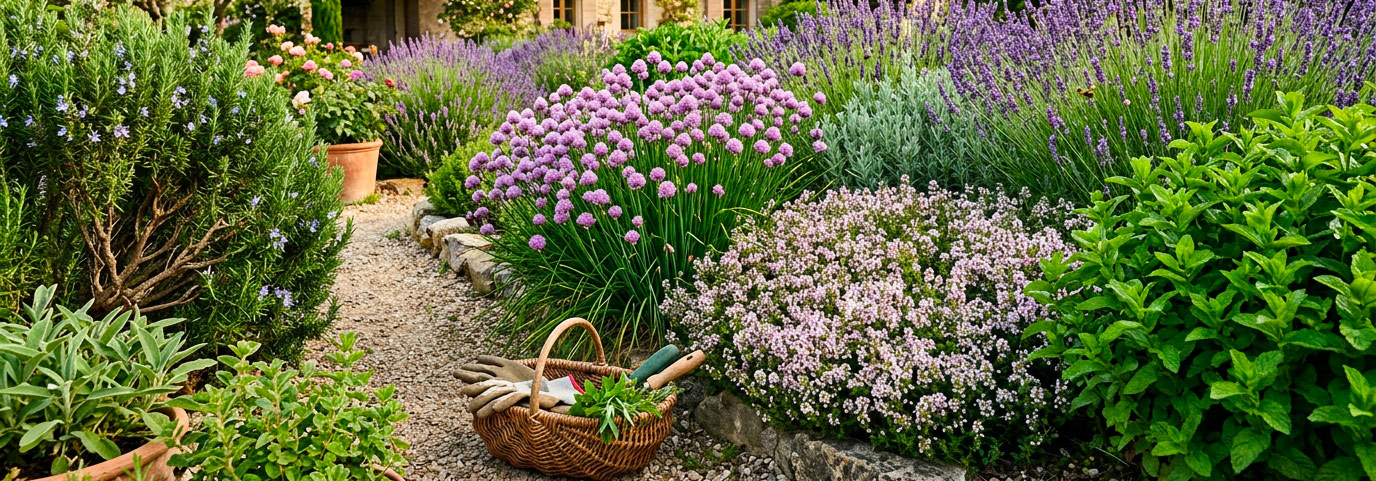
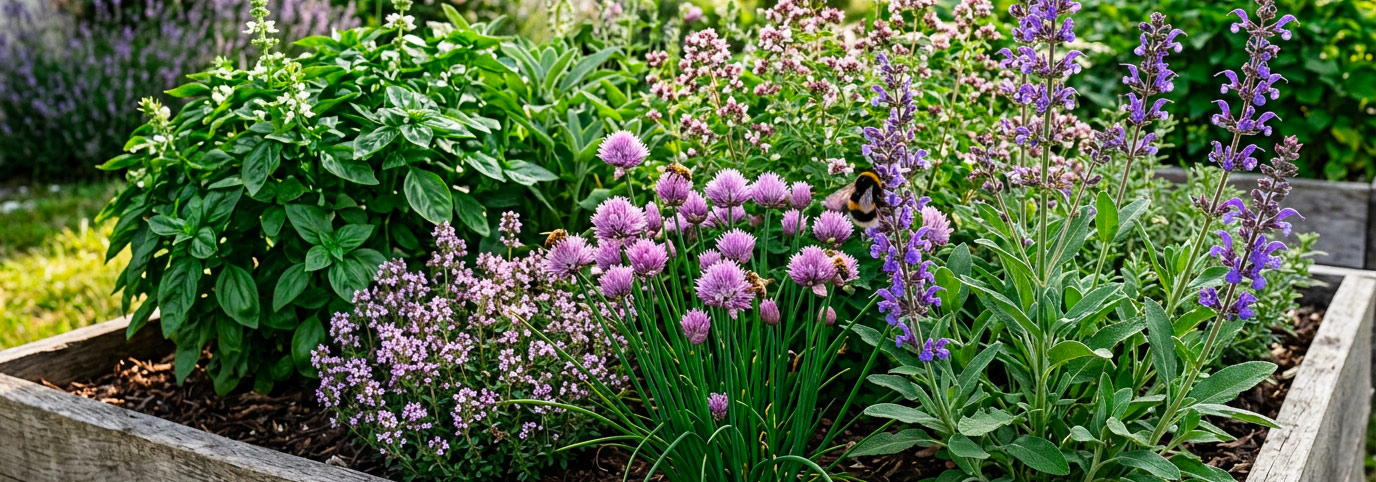
In a mixed herb bed, mint can effectively compete with thyme, oregano, chives, marjoram and certain perennial flowers. Gradually, the slower-growing plants run out of space. The gardener ends up spending more time pulling out mint than actually harvesting it.
Worth watching
Mint planted freely in open ground can spread over several square metres within a few seasons. If you've already planted it without restraint, remove the runners regularly — ideally in spring, before they've had time to root deeply.
A pot: the simplest solution
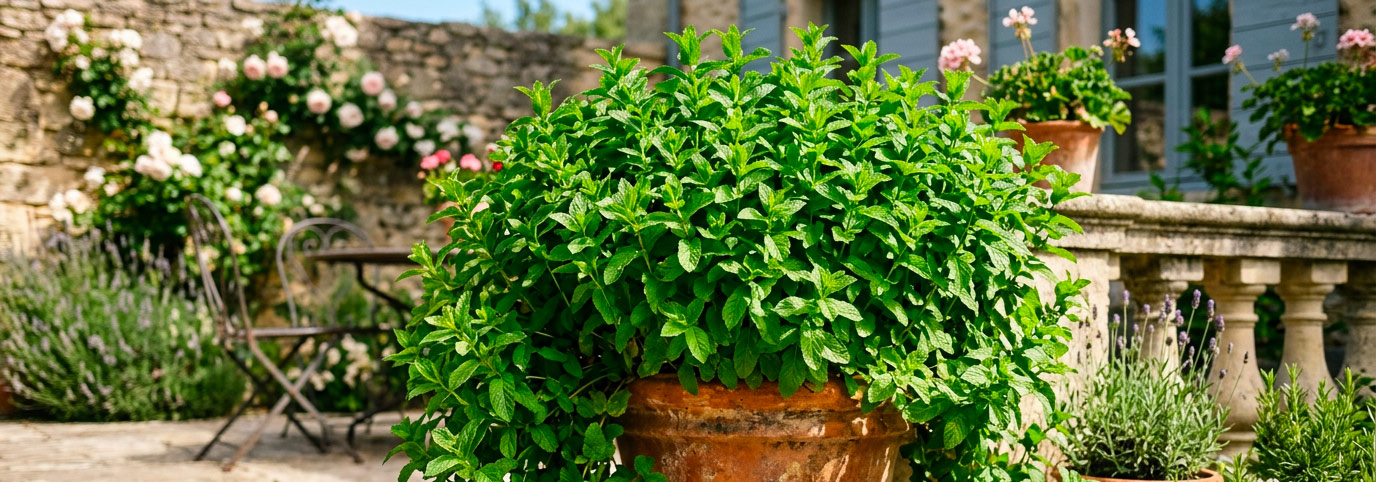
This is why many experienced gardeners grow their mint in a container. A large pot lets you enjoy all the benefits of the plant without dealing with its invasive nature. Mint generally grows very well in a container, as long as the compost stays slightly moist. A pot 30 to 40 cm in diameter is usually enough to produce plenty for infusions, syrups, desserts, fruit salads and cold drinks.
Can you still grow it in open ground?
Yes — but it's better to give it a dedicated space. Some gardeners install a buried barrier or use a large bottomless container to limit rhizome spread. Even then, regular monitoring is needed. The buried pot trick works well: it contains the roots while still letting the plant benefit from soil moisture.
Which mint to choose?
There are many varieties. Spearmint is the most classic for infusions and cooking. Peppermint has a more intense, cooler flavour. Chocolate mint, apple mint and Moroccan mint each bring their own distinct scent. Their behaviour in the garden is much the same though: they all like to spread.
Good to know
Mint is very easy to propagate by cuttings: take a few stems, remove the lower leaves and place them in a glass of water. Roots appear within one to two weeks — a good way to share the plant without risking losing control of it in the garden.
Key takeaways
Mint is probably one of the best herbs for beginners. But its vigour is such that it's worth thinking carefully about placement before planting. A large pot generally gives you the best of both worlds: a productive, easy-to-grow plant that's far simpler to keep in check.