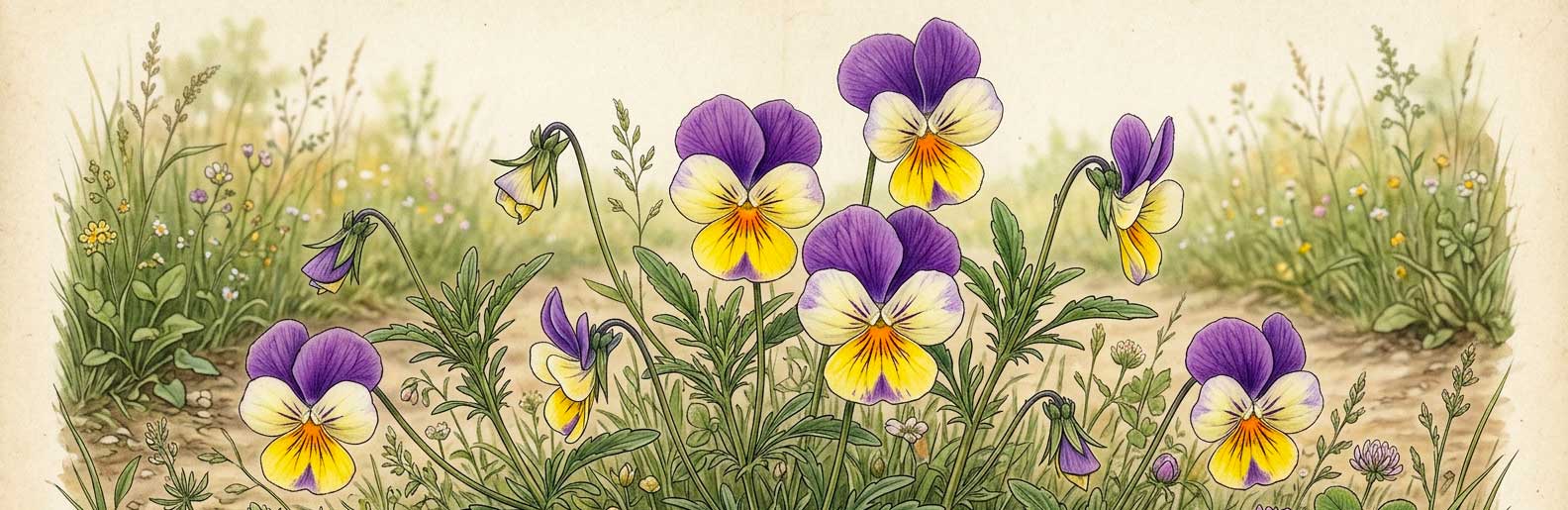
Small, discreet, often hiding among the grass, the wild pansy is still a flower you don't forget. Purple, yellow, white: three colours on a handful of petals, so much so that botanists named it without much effort, Viola tricolor.
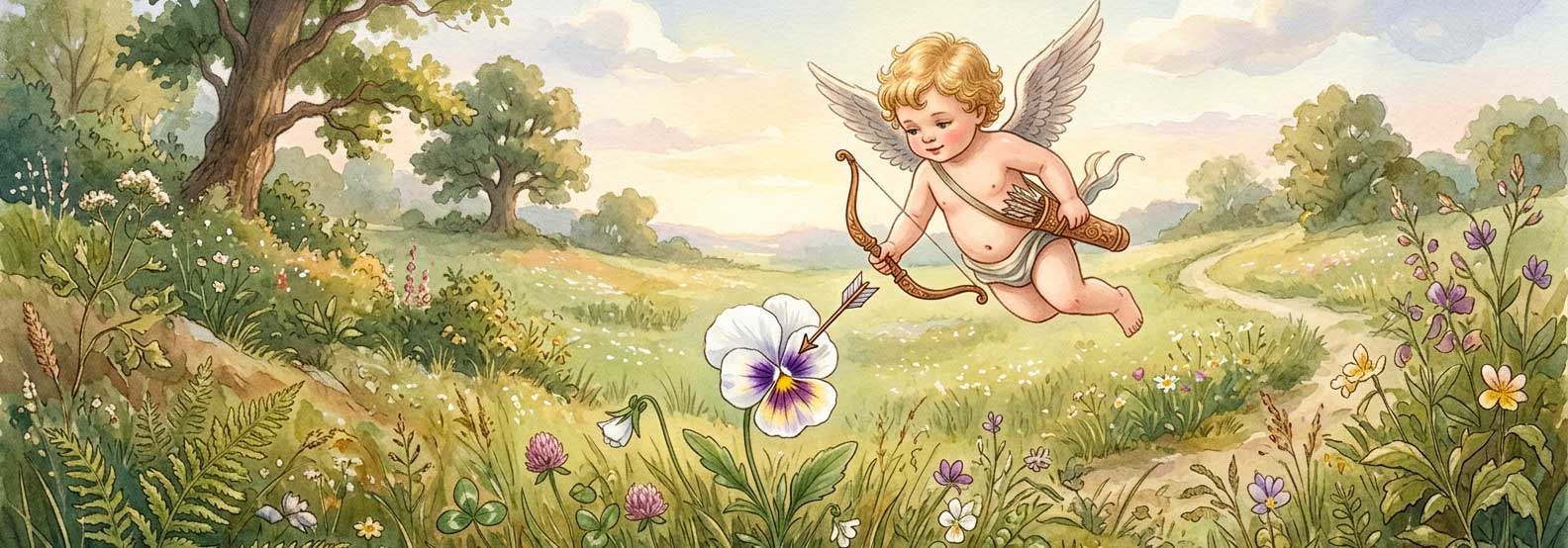
But according to legend, if it's so colourful, it's Cupid's fault. And the fault of some seriously bad aim.
At first, the pansy was white
According to an old legend, pansies were once entirely white. Well-behaved, spotless, no drama.
One day, Cupid, the little winged god of love, let fly one of his arrows. Missed: the arrow overshot its target and pierced a small white pansy. Struck by the weapon of love, the flower instantly turned purple and gold. And ever since, pansies have worn the colours left by Cupid's arrow.
Shakespeare takes up the story
A few centuries later, the little flower began a frankly remarkable literary career.
In A Midsummer Night's Dream, Shakespeare also tells of a Cupid's arrow that misses its mark. (At this point, one starts to wonder about Cupid's training.) The god aims at a young woman, the arrow strays and strikes a little flower instead:
"Before milk-white, now purple with love's wound, / And maidens call it love-in-idleness."
Love-in-idleness is one of the old English names for the wild pansy. And the arrow left it with far more than a colour.
A flower turned love potion
In the play, the juice of this pansy now has a formidable power. Dropped on the eyelids of someone asleep, it makes them fall madly in love with the first creature they see on waking. Human, fairy… or donkey, it makes no difference.
With this little potion, Puck and Oberon go on to cause romantic chaos throughout the forest. The humble pansy becomes one of the most famous flowers in literature: a plant that can make anyone fall in love at first sight.
And all because Cupid's aim was off.
A flower made for love and remembrance
Even its name seems predestined. Long before the big pansies of our window boxes, which descend from it, the little Viola tricolor was already associated with remembrance and with thoughts of a loved one.
Shakespeare plays on this double meaning more than once. In Hamlet, Ophelia hands out flowers and explains: "There's pansies, that's for thoughts."
The pun works for a reason: the English word pansy comes straight from the French pensée, meaning "thought". English has given it other delightful names too: heartsease, the flower that eases the heart, and of course love-in-idleness.
Cupid may not be the only culprit
As so often with legends, there are several versions. Another tradition, Greek this time, says that Eros, the Greek god of love, adored pansies back when they were still white. Aphrodite, jealous of the attention he paid them, is said to have coloured their petals. One fit of divine jealousy, and the little white flower became tricolour.
A tiny flower, plenty of stories
Today, you can simply look at the wild pansy for what it is: a pretty Viola tricolor that naturally blends purple, yellow and white.
But knowing the legend changes the way you see it. The next time you spot a wild pansy by the side of a path, it's hard not to picture one of Cupid's arrows that landed there by accident, a very long time ago.