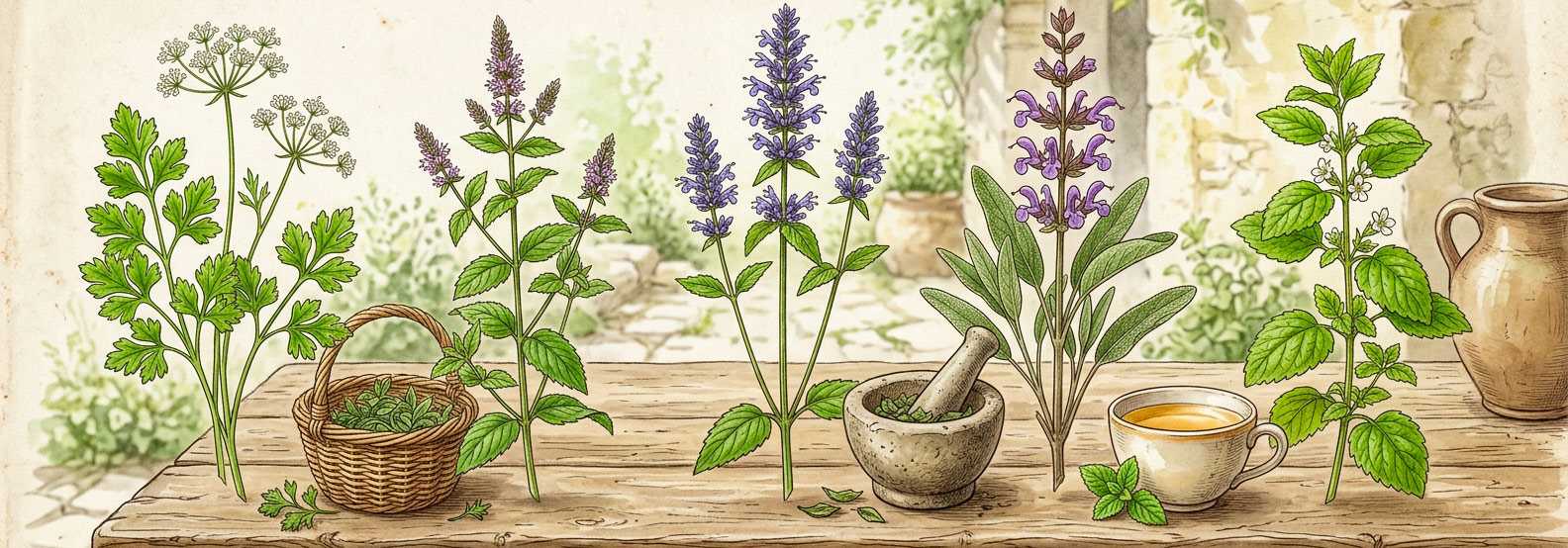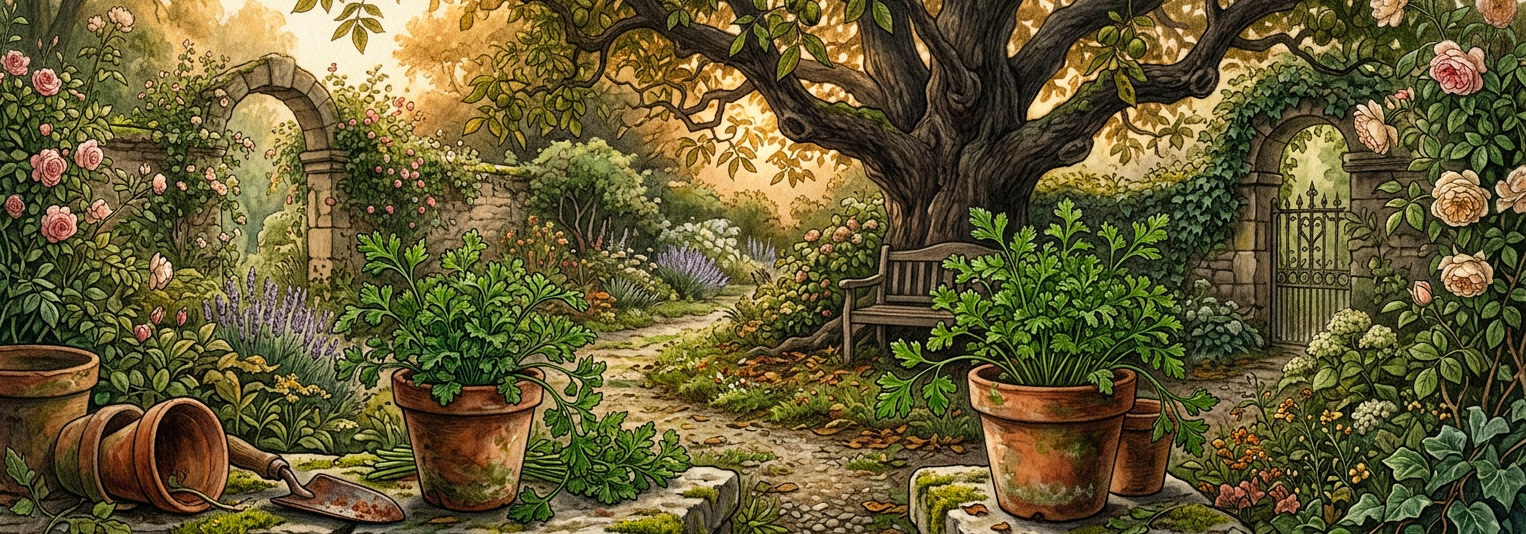
For my last article, where I simply wanted to explain how to prep herbs for winter, I had the misfortune, literally, of filming myself potting up a parsley plant to illustrate the point. Some people pointed out the step was unnecessary. Others saw it as a bad omen.
A bad omen? I'd never heard of any curse tied to transplanting parsley, or then again, once more, I simply wasn't listening. But that was all it took, and I went digging into the forgotten superstitions of our gardens.
Transplanting parsley brings bad luck
This one is spectacular. And, notably, old.
In his Flore populaire, French folklorist Eugène Rolland notes that parsley "should be sown" and that replanting or transplanting it brings misfortune. He even cites a 1697 text claiming that those who transplant parsley would die within the year.
And the belief wasn't confined to one corner of France. Depending on the region, transplanting parsley was said to cause the death of your closest relative, your best friend, your husband (which might give some people ideas), or the head of the household. The superstition has been recorded in Languedoc, Poitou, the Loiret, the Meuse, the Meurthe, Saintonge, the Ardennes, and elsewhere. In other words, moving one poor little parsley plant could apparently wipe out an entire family.
And parsley's grim reputation goes back even further. In antiquity, the Greeks already associated it with death and forgetting: parsley was scattered on graves. The Romans also linked it to the world of the dead and planted it on tombs. This old association with death may well have helped fuel the superstitions that later grew up around growing it.
But there's also a small grain of horticultural truth here. Parsley has a fairly developed taproot and doesn't take kindly to being disturbed. A rough transplant can stress it and trigger premature bolting. (Fine, so with my video, yes, I may have messed up.)
So no, transplanting parsley probably won't kill your husband. But the parsley itself may genuinely resent the operation. And that's perhaps how certain beliefs survive for centuries: a bit of symbolism, a bit of observation, and a great deal of imagination.
Napping under a walnut tree? Bad idea. Cutting it down? Even worse.
The walnut tree had a genuinely unsettling reputation. Sleeping in its shade was considered dangerous: people said a nap under a walnut tree could cause headaches, fainting spells, sometimes even paralysis.
And if, despite all that, you found the tree a little too invasive, it was best to think twice before reaching for the axe. In some folk beliefs, whoever cut down an old walnut tree would die within the year.
The walnut tree was also linked to witches and the devil. In Italy, particularly around Benevento, old accounts describe witches gathering under a walnut tree for their sabbaths.
As is often the case, there's a small kernel of truth behind the reputation. Walnut trees produce juglone, a compound capable of stunting the growth of certain plants nearby. That obviously doesn't explain the witches or the gardener's foretold demise, but watching certain plants wither under a walnut tree could easily have reinforced the idea that this was not a particularly welcoming tree.
So no, napping under a walnut tree probably won't doom you. But between napping under it or cutting it down, our ancestors apparently would have recommended a third option: go take an interest in the apple tree next door instead, Newton-style.
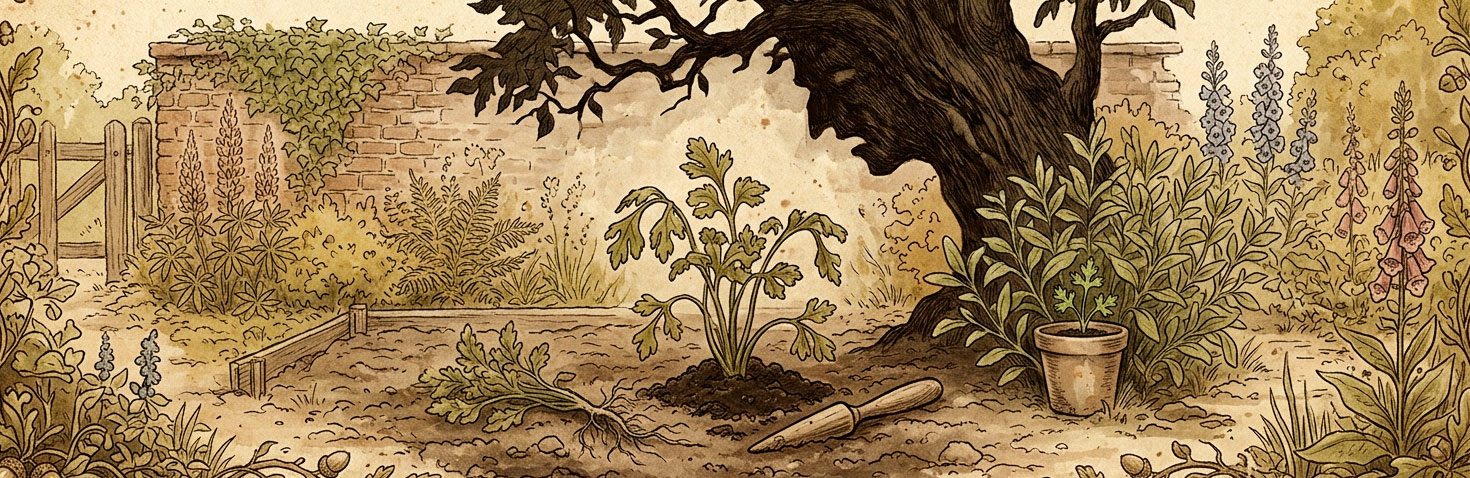
Sowing beans during Holy Week: ruined harvests
The cursed act: working the soil and sowing legumes (broad beans, beans, peas) during the week before Easter. Not only was the harvest doomed to rot (the beans turning white or staying sterile), but it also drew down divine anger and misfortune on the household for having disturbed the earth during Christ's days of mourning.
This superstition, once deeply rooted in the French, Spanish and Italian countryside, rests on a mix of strict Christian devotion, fear of the devil, and a very concrete horticultural reality.
The taboo of iron in grieving soil
In Catholic tradition, Holy Week, and Good Friday in particular, the day of Christ's crucifixion, is a period of absolute mourning. Turning the soil with metal tools (spade, hoe, plough) was seen as a form of desecration: an old belief held that no iron should touch the ground that day.
Disturbing the soil with iron cruelly echoed the nails driven into Christ's hands or the spear that pierced his side. Wounding the earth at that precise moment was, symbolically, wounding Christ's body. A grim peasant saying held that working the land on Good Friday was digging your own grave, or bringing death upon yourself within the year.
The paradox of beans: why them?
The bean, like the pea or the broad bean, carries strong symbolism: its seed looks like a small, dead pebble that, once buried, "resurrects" as a plant.
Strangely, folklore was sometimes more forgiving the day before Christ's death: planting beans on Maundy Thursday supposedly gave them a good chance of growing well. That day was associated with the abundance of the Last Supper.
Sowing during the hours when Christ lay in the tomb, however, reversed the symbolism entirely. The seed was no longer destined for life, but for decay. People believed the devil, taking advantage of Christ's death and his temporary absence from watching over the world, would come and corrupt the seeds. That's why peasants believed the beans would come up white (lacking chlorophyll), stunted, or wouldn't sprout at all.
The reality behind the myth: Easter's weather
As is often the case, peasant superstitions conceal a scientific, weather-based explanation. Easter is a moveable feast, but it generally falls in late March or early April. Beans, however, are a tropical vegetable at heart: they have a vital need for warmth, and their seeds flatly refuse to germinate if the soil temperature drops below 12°C.
If a farmer, pressed by the religious calendar of Holy Week, sowed beans in late March into soil still frozen and waterlogged from winter rain, the seed would inevitably rot in the ground. The rare plants that did emerge would then face spring frosts, turning yellow or "white," and ultimately staying sterile.
Moving or felling the family tree? Not without risk…
In some European traditions, a tree wasn't just a tree: it could be tied to a person's very life. When a child was born, a tree, often a fruit tree, was sometimes planted, becoming in a way that child's living double.
And in that case, it was best taken care of. Because if the tree withered or died, it could foretell the impending death of the person it was linked to. In some traditions, felling it was even worse: killing the tree symbolically put the person whose life it represented in danger.
Which is to say, before deciding that the old pear tree was taking up a bit too much room in front of the window, it was worth thinking it over.
Behind this belief lies a very old idea: a tree that grows alongside a family becomes part of the household itself. Its roots are the house's roots. Its growth mirrors that of the children. Its fruit returns year after year. So uprooting it, moving it, or cutting it down could carry a far graver meaning than a simple orchard rearrangement.
Today, obviously, moving an apple tree doesn't doom anyone. The tree, on the other hand, may genuinely resent the operation: transplanting a mature fruit tree means cutting away a significant portion of its roots and putting it under considerable stress. As is often the case, behind a wildly disproportionate threat lies at least one good reason to think twice before grabbing the spade.
A stolen cutting is said to root better
This one might give people bad ideas. An old superstition claims that a stolen cutting takes root better than one obtained honestly. A folklore collection published in the early twentieth century is even quite categorical: a cutting taken from a stolen plant would be guaranteed to grow.
Why? A mystery. But the belief has clearly circulated widely enough to survive to this day: plenty of gardeners still say that a cutting discreetly "borrowed" from a neighbour's garden, or taken from a plant during a visit, has a better chance of rooting.
Obviously, this is not official permission to go wandering into other people's gardens with a pair of pruning shears. You could, perhaps, negotiate the "theft" in advance.
And above all… don't say thank you
Another variant of the superstition holds that you should absolutely not thank someone who gives you a plant, a seed, or a cutting: saying "thank you" would supposedly cause it to fail.
In some modern versions, the giver is even meant to look away while the other person takes the cutting, to pretend it was stolen. Others prefer to hand over a small coin in exchange: technically, the plant was then never a gift.
"If someone offers you a cutting and you want to honour every possible superstition: don't say thank you, take the plant, leave quietly, and thank the person anyway six months later, once you're sure it's taken root."
And that's not all…
The old-fashioned garden was clearly a minefield. A few more beliefs gathered along the way:
- Picking purslane with your left hand could bring bad luck.
- Bringing plantain into the house could foretell a death in the family.
- Stonecrop, or wall pepper, picked on Midsummer's Day, sometimes served as an oracle: if it wilted too quickly, it could be read as an omen of mourning.
- Cutting mistletoe with a bladed tool could strip it of its protective power, or even bring misfortune.
- Pricking yourself on a hawthorn and then swearing was, in some regions, considered a very bad sign.
- Bringing snowdrops into the house was thought to bring bad luck in several British traditions.
- Stepping on certain weeds, like tormentil in Normandy, could supposedly make you lose your way.
- A birch branch given on May 1st could foretell happiness or misfortune, depending on how it was received.