Basil still looks great, mint is spilling out everywhere, chives are holding strong, thyme and rosemary are doing their own thing. And then you start thinking about winter. And no, I don't want to lose everything this winter, especially the young plants I put in this spring.
The goal isn't to dig up every herb in the garden and line them all up on the windowsill. Some, like the rosemary that's been there for fifteen years, will do just fine through winter on their own. The simplest approach is really to take a small piece of whatever you want to keep using, keep a few pots indoors, and leave the hardy, well-established plants alone outside. In short: you're making a backup copy. And even better, whatever you take in autumn can be replanted outside come spring.
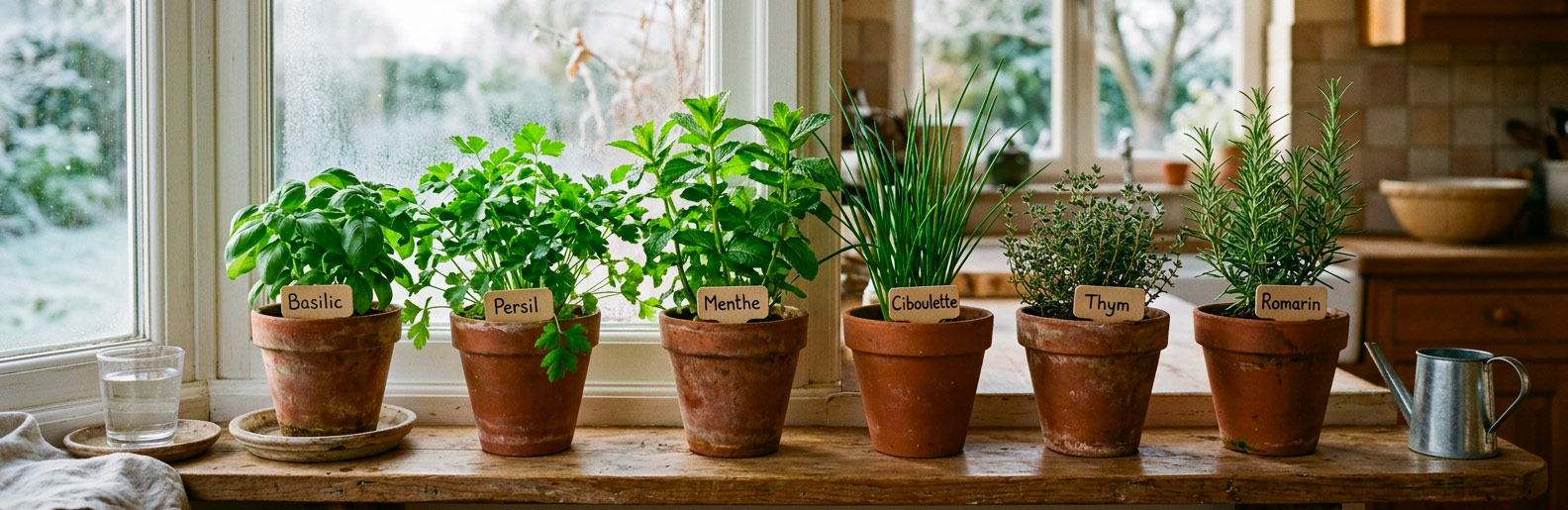
So the idea isn't just to survive the winter. It's a small loop: take cuttings in autumn, enjoy your herbs through winter, and replant in spring.
Basil: this one is worth planning ahead for
Basil is probably the first one to think about, because it really doesn't like the cold at all. Rather than waiting for the first cold night to find a bouquet of blackened leaves, I prefer to take a few cuttings in late summer.
It's simple: cut a healthy stem, remove the lower leaves, put it in a glass of water, wait for roots to appear, then pot it up. And there you have a basil plant ready to spend winter indoors. The big plant left outside will simply finish out its season. That's fine.
The point isn't necessarily to save the original plant, but to avoid having to buy more from the supermarket the moment you remember what "putting on a sweater" means. And in spring, if the plant is still looking good, I can replant it outside again, without a trip to the garden centre.
Mint
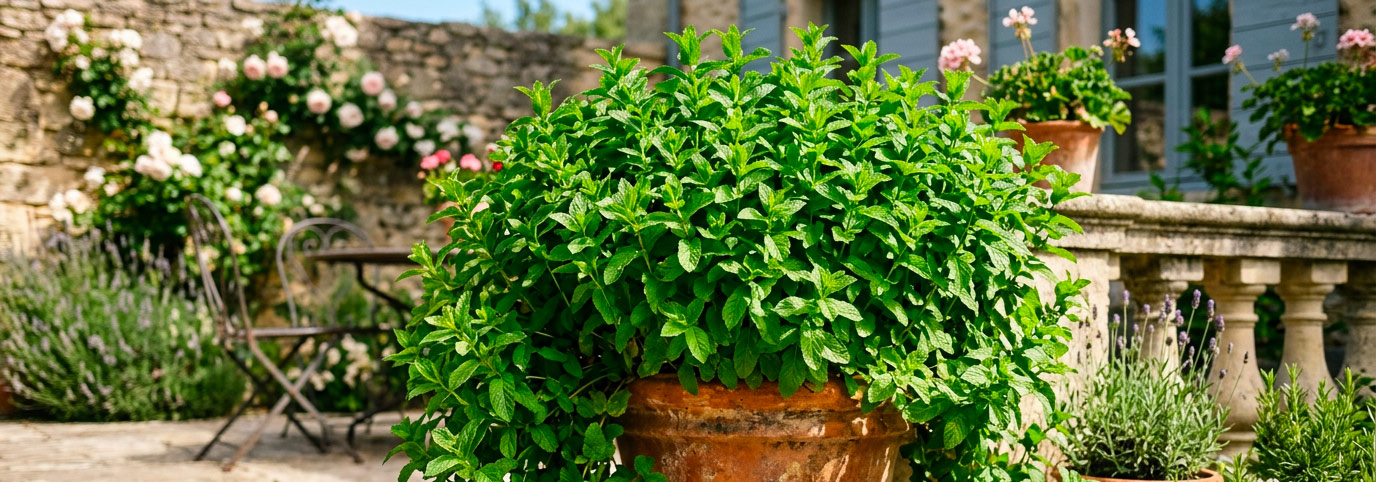
With mint especially, there's no need to bring the whole root ball in: it's a perennial and generally comes back very well in spring. I simply take a small piece with roots, or a bit of rhizome, pot it up, and leave the rest outside.
The advantage: you can keep cutting a few leaves through winter. And in spring, the small potted piece can go back outside (assuming the mint left outside hasn't already taken over everything).
Chives
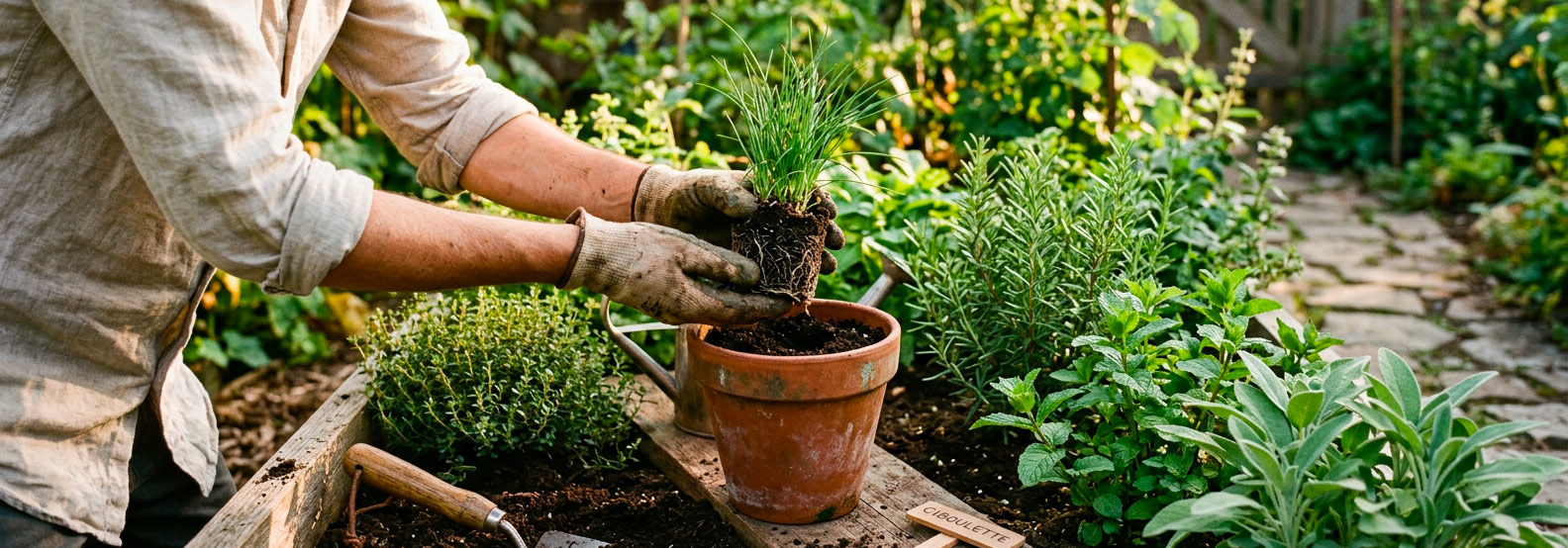
Same principle. Chives form a clump, so you can take a small section, with its roots, and replant it in a pot. The main clump stays outside: it may partly die back over winter, then come back in spring. The small pot, meanwhile, stays handy near the kitchen.
Parsley
Parsley can hold up outside for quite a while, especially if it's well established. But if I want some within reach through winter, I can take a young plant and pot it up. Just one thing to watch: parsley likes a bit of depth, so no mini pots. Keep a good root ball, replant carefully, and avoid breaking the taproot.
In spring, the potted plant can go back to the garden, though it's worth keeping in mind that parsley is biennial and may bolt to seed in its second year.
Rosemary
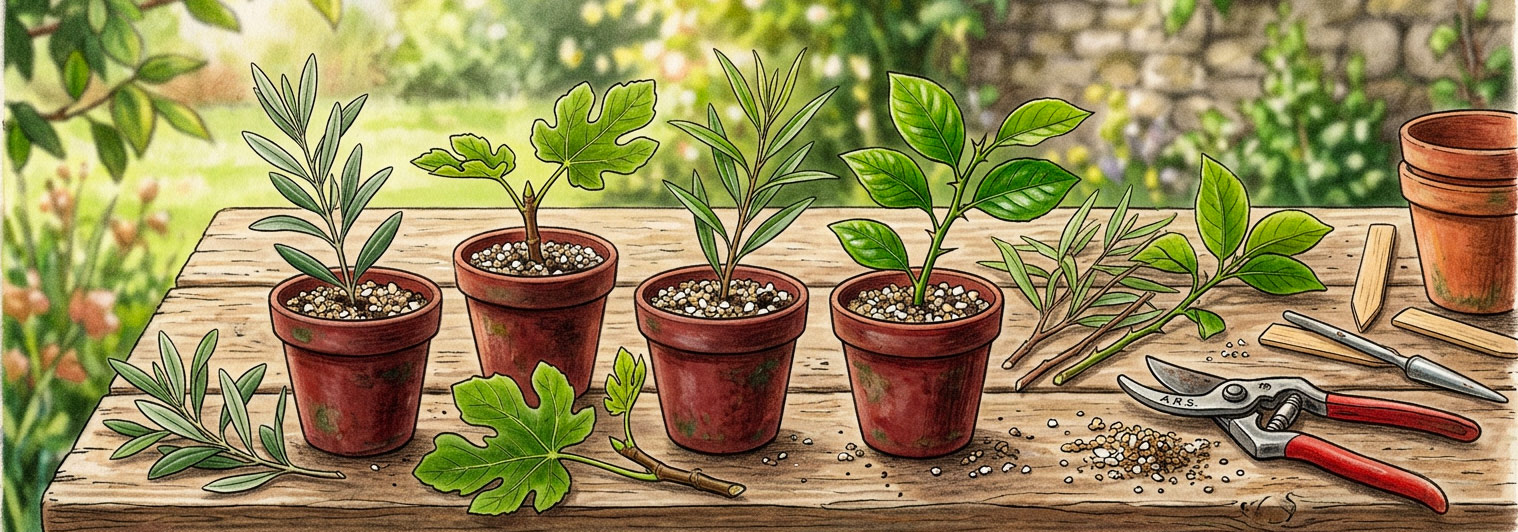
The big, well-established rosemary in the garden, I leave right where it is. I'm not going to dig it up to bring it indoors. That said, if I want a small backup, or if it's still a bit too young to be sure it'll make it through winter outside, I can take a few cuttings and keep one indoors.
To do this: cut a few stems, strip the leaves off the bottom five centimetres, and plant in a light, well-draining substrate. The soil should stay moist, out of direct light. In spring, the cutting can be planted back outside.
Thyme
Thyme is in the same boat. Once well established, it can stay in the garden. If I want some indoors, I take a small portion, divide it or take a cutting, and pot it up: no need to move the whole plant.
And indoors, above all: go easy on the water. Thyme almost prefers being slightly neglected. Come spring, back to the garden it goes.
Sage
Sage, too, can stay outside in many regions. So I leave the main plant in the garden. If I want to cover myself, I take a small cutting: that way, if the winter is a rough one or the outdoor plant struggles, I have a backup. And if everything goes fine outside, I simply end up with a second sage plant to put in the ground come spring.
Oregano
Oregano is also a perennial. You can take a small piece of the clump and pot it up. The rest stays outside and will come back in spring.
So what do you actually need to bring indoors?
| Priority | Herbs concerned |
|---|---|
| Genuinely worth planning for before the cold hits | Basil, fragile young plants, potted herbs in very exposed spots |
| Worth taking a small amount of to keep harvesting | Mint, chives, parsley, oregano |
| Best left outside, with a backup cutting if you like | Thyme, rosemary, sage |
Where do the pots go?
Once indoors, the real problem is no longer the cold, it's the light. In winter, days get shorter and many herbs start to get leggy if they're stuck in a dim corner. So I pick the brightest spot available, ideally a well-exposed window. And I keep an eye on things: if the stems get long, pale and floppy, it's usually a sign they're not getting enough light.
Watch the watering
Another classic trap: trying too hard to do the right thing. Indoors, plants generally use less water than they would outside in the middle of summer. So I don't water just "because it's Sunday." I touch the soil, and if it's still moist, I leave it alone.
For basil, mint, parsley or chives, I keep the substrate lightly moist. For thyme, rosemary, sage and oregano, I let it dry out more between waterings. And above all: no standing water in the saucers.
Before bringing anything in: a general inspection
Because herbs aren't the only thing you risk bringing indoors: you can also bring in a whole crowd of little critters, along with their eggs. Basically, a whole tiny world that never asked to move in but will happily enjoy the central heating. Before bringing in a pot or a cutting, I check under the leaves, around the new growth, along the stems, and on the surface of the soil. If I can, I also leave new pots for a few days in an in-between space (a veranda, greenhouse, or bright garage), just to see if anyone comes out of hiding.
"The idea isn't just to survive the winter. It's a small loop: take cuttings in autumn, enjoy your herbs through winter, and replant in spring."
And in spring: back outside
This is where the method really pays off. The small plants kept indoors all winter aren't doomed to spend their entire lives on the windowsill: you can replant them outside in spring. Just not directly.
A plant that's spent several months indoors has grown used to weaker light, little wind, and fairly stable temperatures. If I put it straight into eight hours of full sun, it's likely to take a serious hit. So I ease it back in gradually over about a week:
A few hours outside, in the shade
Then a bit more time
Then some gentle sun
And finally its permanent spot
For plants sensitive to cold, like basil, I obviously wait until the risk of frost has passed. For mint, chives, thyme, rosemary, sage or oregano, moving back outside is generally very straightforward.