Compost is sometimes surrounded by a kind of mystique. You hear about carbon-to-nitrogen ratios, ideal temperatures and complicated recipes. In reality, gardeners have been making compost for centuries with far less theory and far more common sense. If yours seems to have gone on strike, there's usually a simple explanation.
When compost smells bad
A healthy compost heap shouldn't smell like a bin. When an unpleasant odour appears, it's often because the pile contains too much fresh material: lawn clippings, vegetable peelings, overripe fruit or crop debris. These materials are useful, but in large quantities they compact and block airflow.
The fix is usually very simple: add dead leaves, straw, torn brown cardboard or a few small twigs. The compost gradually finds its balance again.
Worth remembering
Good compost is roughly half fresh material (green and moist) and half dry material (brown). If it smells, there's almost always a shortage of dry browns.
When nothing seems to happen
At the other extreme, some compost heaps seem frozen for months on end. No matter how long you wait, the leaves stay intact and the pile barely shrinks. In this case, the compost is often too dry, or made up mainly of brown materials. A gentle watering and a few additions of fresh scraps can be enough to wake up all the tiny life working away inside.
Moisture: neither swamp nor desert
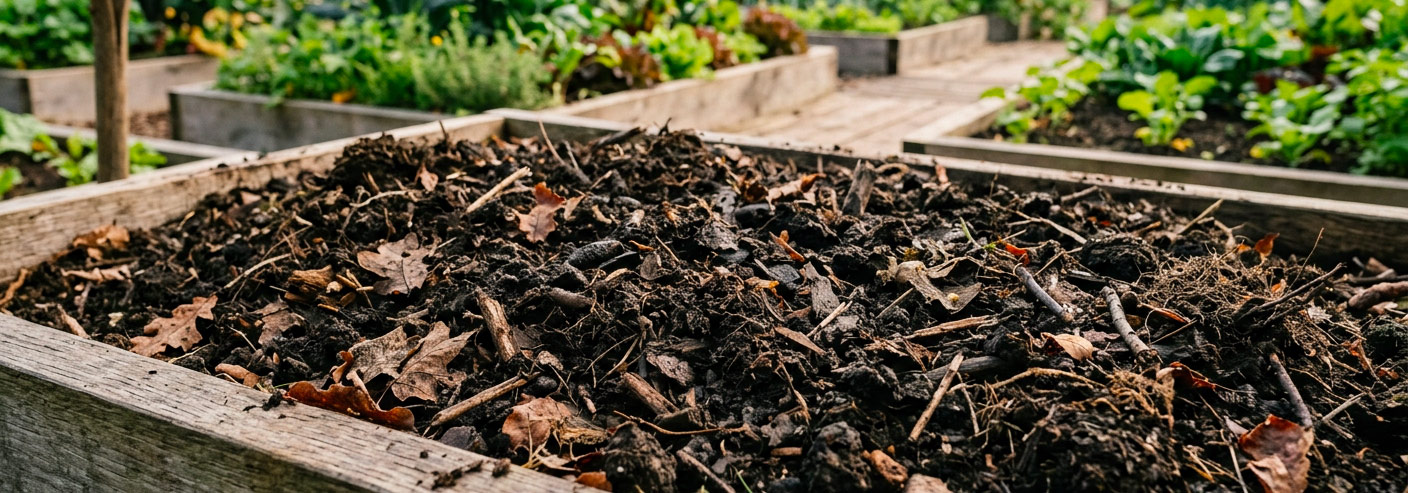
Good compost feels like a wrung-out sponge: moist to the touch, without dripping water. Too dry, and micro-organisms slow right down. Too wet, and air disappears and bad smells take over. This is probably the single most important thing to watch — and the easiest to correct.
What can go into compost?
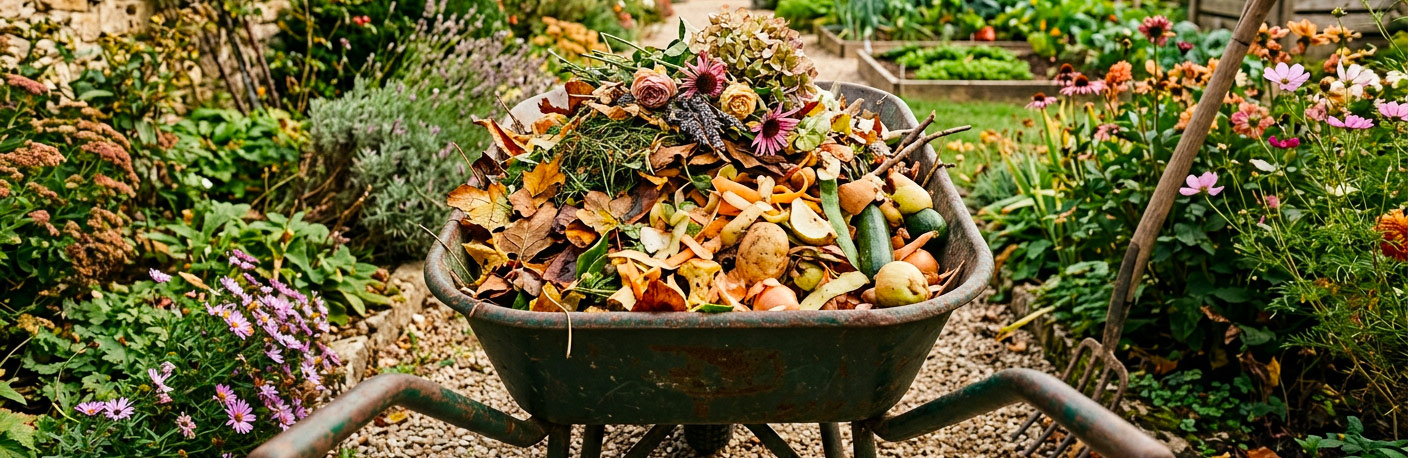
Good news: most kitchen and garden waste can end its life in the heap. Vegetable peelings, overripe fruit, coffee grounds, crushed eggshells, spent flowers and dead leaves all belong there naturally.
A word of caution
Diseased plants and weeds already covered in seeds deserve more care. If in doubt, it's better to leave them out than to turn your compost into an official weed distributor.
How to tell when it's ready
Mature compost no longer looks much like what went in. The peelings have disappeared, the leaves are unrecognisable, and the whole thing has turned a deep, dark colour. Above all, it gives off that pleasant earthy woodland smell that every gardener knows. At that point, it's ready to go back and feed the vegetable patch.
The secret isn't a miracle ingredient
We often look for a magic activator or the perfect recipe. But good compost really comes down to a balanced mix of fresh and dry materials. Traditional gardeners didn't talk about carbon and nitrogen. They simply mixed garden waste, dead leaves, a little straw and kitchen scraps. And it worked very well. Sometimes the simplest methods are also the most effective.